
Pachypodium lealii
Pachypodium lealii
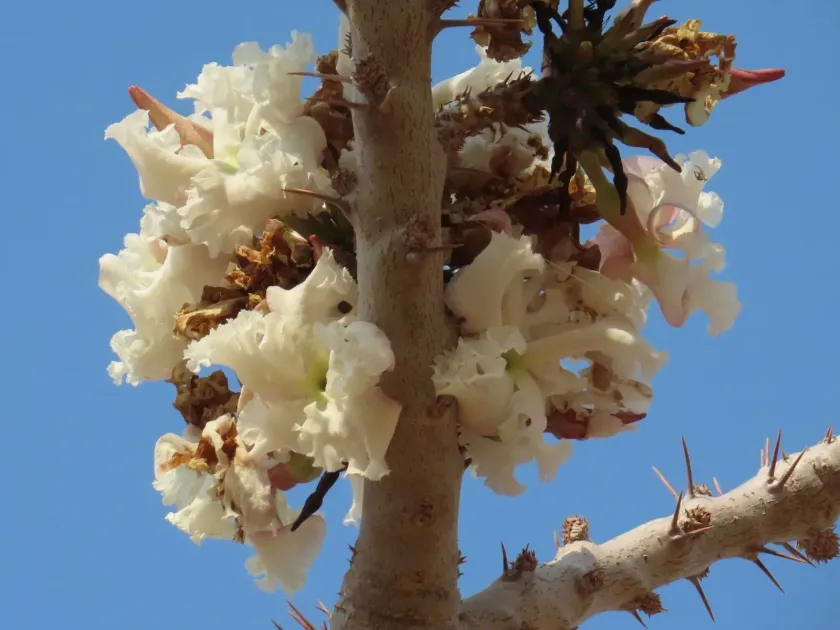
Description
Growing requirements
Pachypodium lealii is a distinctive succulent shrub belonging to the Apocynaceae family. Native to the arid regions of Namibia and Angola, this plant is well-adapted to surviving long periods of drought through specialized morphological structures.
The plant features a succulent, bottle-shaped trunk armed with paired spines that serve as defense against desert herbivores. Its biological structure allows for significant water storage, enabling the plant to withstand harsh climatic oscillations in its native habitat.
Cultivation requires full sunlight to maintain compact growth and structural integrity. In a greenhouse or indoor setting, providing high-intensity lighting is crucial for the development of its characteristic thickened stem and flowering potential.
Regarding soil requirements, Pachypodium lealii demands a highly porous, inorganic-based substrate. A mixture of gravel, perlite, and a small amount of sandy loam provides the necessary drainage to prevent root asphyxiation during the growth season.
Watering strategy must be strictly seasonal. During the growing period, water only after the substrate has dried out completely. Throughout the winter dormancy phase, the plant requires almost total dryness to prevent physiological rot and stimulate flowering in spring.
Main diseases and pests
The most critical threat to this species is root rot, induced by waterlogged soil and poor air circulation around the root zone. Ensuring the pot has large drainage holes is a fundamental requirement for long-term health and growth.
Pests such as mealybugs represent a common challenge, especially in indoor collections. These insects cluster in the axils of the spines, making manual removal difficult; therefore, systemic insecticide treatments are often required for effective control.
Spider mites may also infest the plant under conditions of very low humidity, leading to discoloration and potential loss of leaves. Increasing airflow around the plant can help mitigate these infestations without the need for excessive chemical use.
Infections like stem rot or bacterial blight can quickly turn fatal due to the plant's high water content. Any soft or discolored spots on the trunk should be treated surgically by removing the affected tissue and applying a fungicide.
Prevention involves strict hygiene, such as using sterilized potting mixes and avoiding overhead watering. Monitoring the plant's appearance allows for the early detection of stress, ensuring that small issues do not escalate into major plant health failures.