
Pachypodium inopinatum
Pachypodium inopinatum
Description
Growing requirements
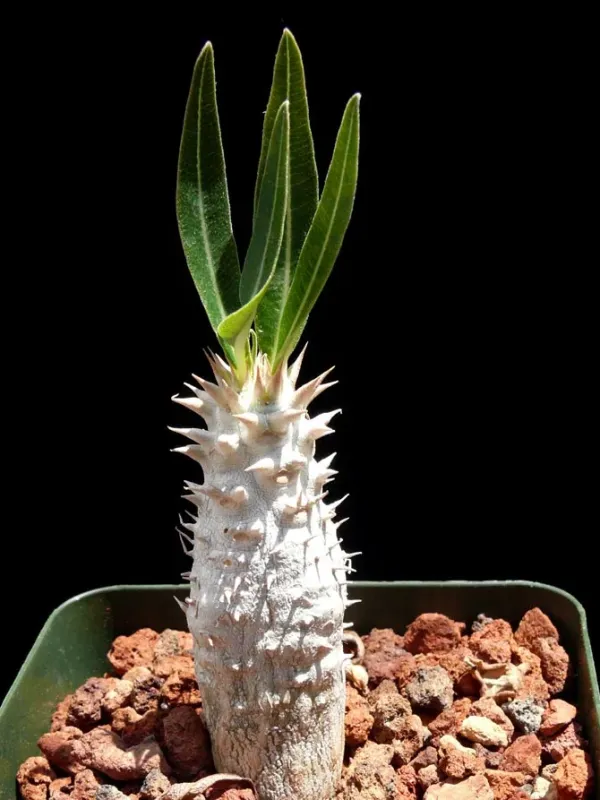
Pachypodium inopinatum is a rare species of succulent plant belonging to the Apocynaceae family. Native to the rugged, dry terrains of Madagascar, it is highly adapted to arid environments through the development of a thickened, water-storing stem known as a caudex.
The plant exhibits distinctive botanical traits, including a stout, succulent trunk that serves as a reservoir during prolonged droughts. It bears narrow, deciduous leaves that emerge during the growing season and are often protected by sharp spines along the branches.
Successful cultivation requires intense sunlight. The plant thrives best in a bright, warm location, preferably in a greenhouse or a sunny window, where it can receive direct light for most of the day to maintain its compact and healthy growth form.
The soil requirements are strict: the substrate must be highly porous and inorganic. A mix consisting primarily of coarse sand, pumice, and grit is essential to ensure rapid drainage, preventing the sensitive roots from lingering in moisture, which is fatal to the plant.
Watering should be approached with caution, mimicking the cyclic rainfall of its native habitat. During the active growth phase in summer, water sparingly only when the substrate is completely dry. In winter, the plant enters dormancy and should be kept almost entirely dry.
Main diseases and pests
The most significant threat to Pachypodium inopinatum is root rot, typically caused by overwatering during periods of low temperature or insufficient light. Once rot infiltrates the caudex, the plant is extremely difficult to save, making prevention the best strategy.
Pests such as spider mites and mealybugs are the primary concerns for this species. These insects thrive in dry, stagnant air conditions. They attach themselves to the spines and leaf junctions, weakening the plant and causing significant physiological stress.
Regular inspection of the plant is necessary to detect early signs of infestation. If mites or mealybugs are present, they should be treated with appropriate contact or systemic insecticides, avoiding harsh oils that could damage the succulent skin of the caudex.
Fungal infections can also occur if the humidity around the plant is too high or if air circulation is inadequate. Maintaining good airflow is essential to keep the surface of the plant dry and prevent the colonization of harmful pathogens.
In cases of physical trauma or pruning, any exposed tissue must be left to callus over naturally or treated with a fungicide to prevent rot from entering the open wound. Proper hygiene in the growing space remains the primary defense against recurring diseases.