
Knowlton's hophornbeam
Ostrya knowltonii
Description
Growing requirements
Knowlton's hophornbeam (Ostrya knowltonii) is a deciduous tree species belonging to the Betulaceae family. It is a slow-growing plant that is recognized for its significant drought tolerance and ability to thrive in challenging, rocky environments.
The native distribution of this species is confined to specific regions of the southwestern United States. It is typically found in canyons and mountainous areas of Arizona, Utah, and New Mexico, often growing in sheltered limestone-rich soils.
This species requires well-drained, alkaline soils to remain healthy. It is exceptionally well-adapted to arid climates where moisture is intermittent, making it a subject of interest for climate-resilient landscaping and restoration projects.
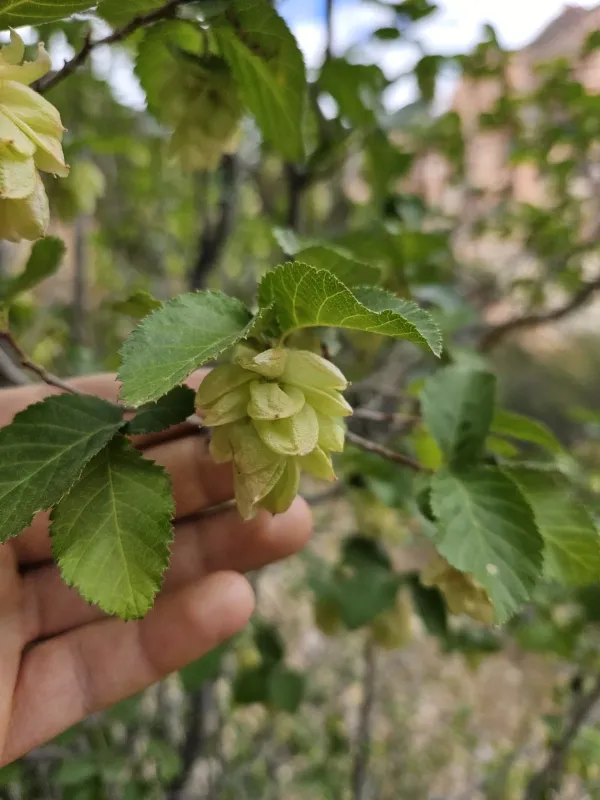
Botanically, Ostrya knowltonii is characterized by its grayish, exfoliating bark and ovate, doubly-serrate leaves. The fruit, held within papery, hop-like bracts, is a key diagnostic feature for the genus and contributes to its common name.
Economic and horticultural use is primarily focused on conservation and the introduction of hardy species into arid botanical gardens. Its potential for use in sustainable forestry is currently being studied by researchers interested in biodiversity preservation.
Main diseases and pests
Environmental threats to the species are mainly linked to habitat fragmentation. Because these trees exist in isolated populations, any local climate shift or human interference can significantly threaten their long-term survival.
Like other members of the birch family, Ostrya knowltonii can be prone to various leaf-feeding insects. These pests may not kill the tree, but they can reduce the plant's overall vigor and resistance to other environmental stressors.
Fungal infections, particularly those that impact root health, are a concern in poorly managed nursery conditions. Proper spacing and airflow are essential to prevent the spread of diseases in cultivated stocks.
Wildfires pose a major risk to this species, as it lacks thick, fire-resistant bark in its early growth stages. Recovery after fire damage is slow, highlighting the need for fire management strategies in areas where the tree naturally occurs.
Monitoring for signs of stress, such as leaf wilting or bark lesions, is crucial for those cultivating this rare species. Maintaining high soil quality and preventing root zone compaction will significantly decrease the susceptibility of the tree to common pathogens.