
Osmanthus delavayi
Osmanthus delavayi Franch.
Description
Growing requirements
Osmanthus delavayi is a slow-growing evergreen shrub belonging to the Oleaceae family. Originating from the mountainous regions of southwest China, this plant is valued for its dense foliage and remarkably fragrant white flowers that bloom in early spring.
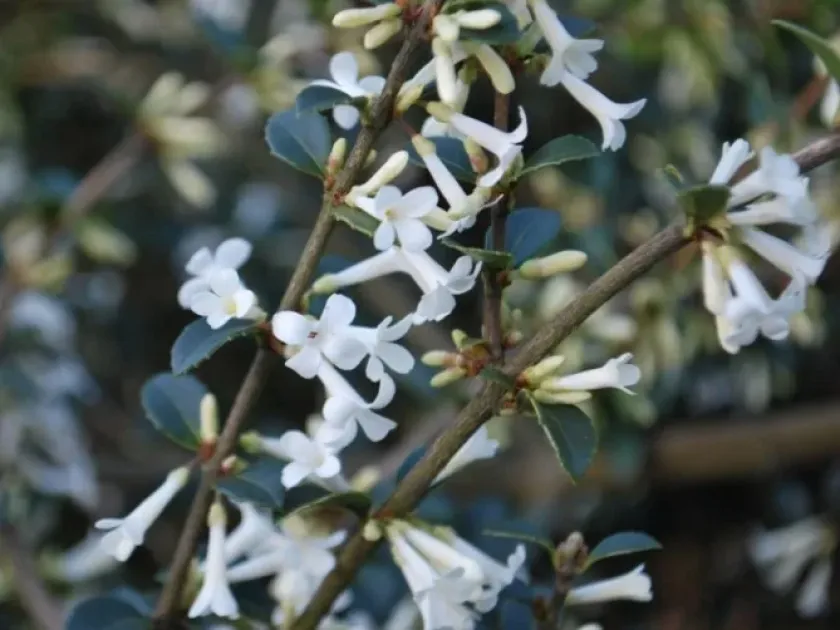
The botanical structure consists of small, leathery, serrated dark green leaves arranged on stiff, arching branches. The flowers are small, tubular, and occur in clusters, releasing a powerful, sweet scent that is a significant feature in ornamental horticulture.
Climate requirements for this species include mild, temperate conditions. While it is hardy in many regions, it thrives best in environments protected from harsh, drying winds and extreme frost. Temperatures below -15°C may cause foliage damage, necessitating protective coverings in colder zones.
Soil should be rich, well-draining, and slightly acidic to neutral. Ensuring the substrate does not become waterlogged is critical, as the roots are susceptible to decay in heavy, saturated soils. Adding organic compost during planting helps maintain nutrient levels.
- Plant type: Evergreen shrub.
- Mature size: 1.5–2 meters.
- Bloom time: April to May.
- Sunlight: Full sun to partial shade.
- Propagation: Semi-hardwood cuttings.
Main diseases and pests
The primary threats to Osmanthus delavayi involve soil-borne diseases such as root rot, which are often the result of improper drainage and excessive watering. Providing a well-draining planting site is the most effective preventative measure against these infections.
Fungal issues like powdery mildew may appear during humid, stagnant conditions. To mitigate this risk, it is recommended to ensure adequate spacing between plants and to prune annually to encourage airflow through the center of the shrub canopy.
Common pests include scale insects and mealybugs, which can cluster on stems and sap plant vitality. If an infestation is detected, physical removal or the application of horticultural oils is recommended to keep the shrub healthy and thriving.
Spider mites can become a nuisance during hot, dry summer months. Monitoring the undersides of leaves and increasing humidity through light misting can help deter these pests from establishing a significant population on the foliage.
Economically, this plant is primarily utilized in the landscaping industry. It is highly prized for its use in creating fragrant hedges, solitary ornamental specimens, or as a structural element in sophisticated gardens, contributing significantly to the aesthetic value of urban green spaces.