
Starry Osbeckia
Osbeckia stellata
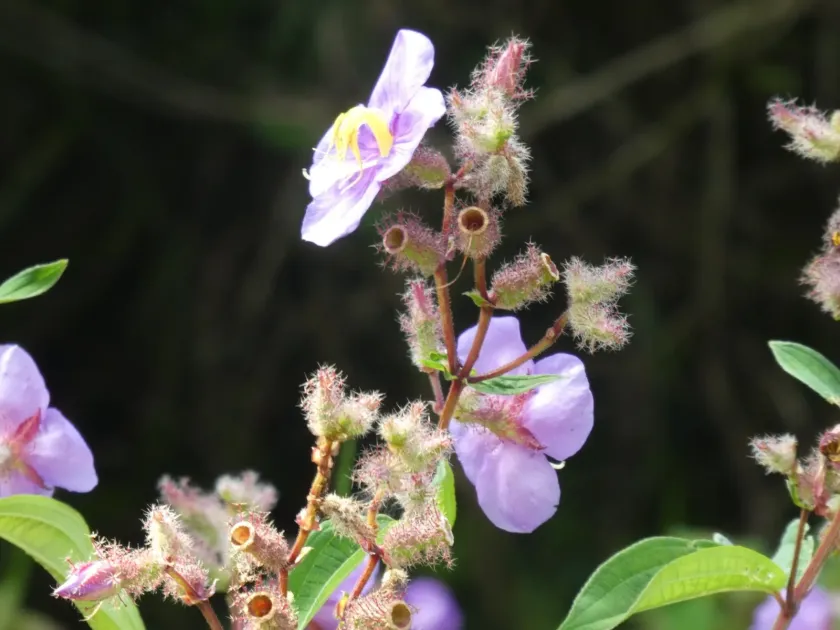
Description
Growing requirements
Osbeckia stellata, commonly known as the Starry Osbeckia, belongs to the Melastomataceae family, which is renowned for its diverse and attractive tropical flora. The plant is native to the mountainous regions of Asia, specifically appearing across the Himalayas and southern China, where it thrives in moist, well-drained highland environments.
Botanically, the plant is a perennial shrub characterized by its distinct, opposite leaves with prominent longitudinal veins. Its flowers are the primary feature of interest, typically displaying vibrant purple or pink petals arranged in a starry pattern, which appear during the peak growing season under optimal light conditions.
Cultivation requirements for this species are centered on maintaining high humidity levels and a stable tropical climate. It is not cold-hardy, meaning that in many regions, it must be grown in protected environments such as greenhouses or conservatories to prevent damage from frost or low temperatures.
Soil management for Osbeckia stellata requires a substrate that is both rich in organic matter and acidic in nature. Proper aeration of the root system is essential to prevent fungal issues; therefore, growers often incorporate perlite or similar materials into the potting mix to ensure effective water drainage.
From a utility perspective, the Starry Osbeckia is primarily valued as an ornamental crop suitable for specialized horticultural markets. While it has historical uses in traditional herbal practices in its native range, modern agricultural applications focus on its aesthetic appeal and suitability for controlled-environment plant production.