
Orostachys spinosa
Orostachys spinosa
Description
Growing requirements
Orostachys spinosa, commonly known as the prickly or spiny-leaved stonecrop, belongs to the Crassulaceae family. This succulent is highly specialized for life in harsh, rocky terrains, including mountain steppes and debris slopes, where resources are scarce.
The plant originates from the mountainous regions of Eastern Siberia, the Russian Far East, Mongolia, and Northern China. Its natural habitat dictates its strict requirements for cultivation: it demands well-drained, sandy or stony soils and cannot tolerate stagnant water, which often leads to root death.
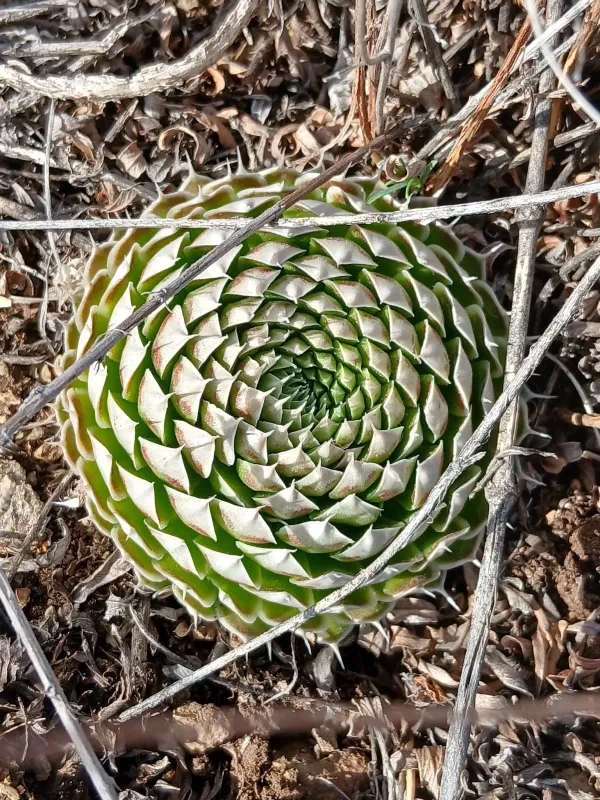
Botanically, it forms a dense, spherical rosette of succulent leaves, each ending in a distinct sharp point. Its life cycle involves producing a tall, spike-like inflorescence once mature, after which the mother plant dies, having already produced vegetative offsets to propagate the population.
Regarding climatic adaptability, the species is exceptionally cold-hardy, capable of surviving severe winters. In agricultural and landscaping practices, the primary challenge is to maintain minimal moisture levels to mimic the arid, nutrient-poor conditions of its native alpine environment.
Economic uses include its popularity in rock gardens and xeriscaping due to its low-maintenance nature and aesthetic form. Additionally, various extracts from this plant are studied for their potential medicinal properties, particularly as traditional folk remedies for inflammation and fatigue.
Main diseases and pests
The primary concern for Orostachys spinosa is root rot, which typically stems from poor drainage or excessive atmospheric and soil humidity. Ensuring a substrate that mimics its natural rocky habitat is the most effective preventative measure.
Pests are generally not a major threat due to the plant's tough, succulent structure. However, in confined or crowded environments, soft-bodied insects such as mealybugs or aphids can occasionally colonize the rosettes, requiring manual removal or specialized non-toxic treatments.