
Origanum tournefortii
Origanum tournefortii
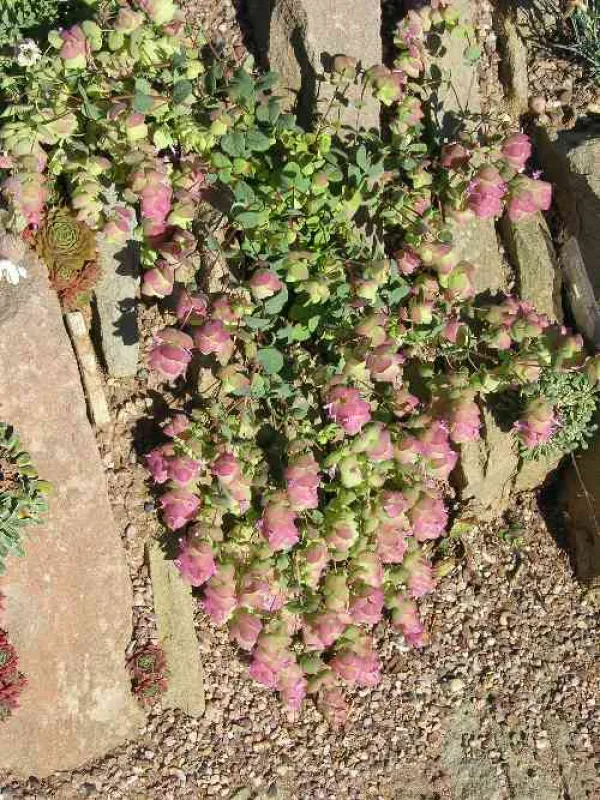
Description
Sowing dates
Origanum tournefortii belongs to the Lamiaceae family. It is a perennial herbaceous plant that reproduces both by seeds and vegetatively in its natural habitat.
Sowing seeds for cultivation is recommended in early spring once soil temperatures reach 10–12 degrees Celsius. The seeds are extremely small, requiring a sowing depth of no more than 0.5 cm to ensure proper contact with moist substrate.
When using a nursery method, seeds are sown in trays during March. The seedlings are transplanted into open ground after the threat of spring frosts has passed, maintaining a spacing of 30 by 40 cm to ensure adequate airflow.
This plant possesses significant ornamental and medicinal value, making it a promising candidate for farms specializing in rare essential oil crops.
For vegetative propagation, division of established clumps can be performed in autumn or spring, allowing for faster establishment of mature plants compared to seed-grown specimens.
Growing requirements
This species is native to the rocky regions of the Eastern Mediterranean, notably the Aegean islands. Successful cultivation requires conditions mimicking its natural habitat: full sun exposure and excellent drainage.
Origanum tournefortii prefers light, well-aerated calcareous soils. Heavy clay soils with stagnant water are detrimental to the root system, often triggering rot-related diseases.
The plant is highly drought-tolerant; however, it requires moderate watering during the active growth phase. Excessive moisture combined with high temperatures can lower the essential oil concentration in the foliage.
While the plant thrives in poor soils, it responds well to organic fertilization with an increase in biomass. Avoid excessive nitrogen, which can reduce the plant's winter hardiness.
In temperate climates, provide a sunny location protected from cold winds, especially during the winter dormant season.
Main diseases and pests
The main threats to this oregano species are fungal diseases resulting from excessive soil moisture or poor air circulation. These include powdery mildew and various root rots.
To prevent the spread of pathogens, strictly monitor irrigation practices and ensure regular soil cultivation. Thinning out plantings helps reduce infection risks by improving airflow.
Pests such as aphids and spider mites may target young shoots during hot, dry summer periods. Early detection allows for the use of organic biocontrols to protect the harvest.
Slugs and snails pose a risk to young seedlings. Wet mulch around the plant base provides a hiding spot for these pests; therefore, using dry mulching materials is advised.
Regular inspection of leaves for spots or distortions helps control infection outbreaks at an early stage, minimizing the need for synthetic chemical protection.
Harvesting
Harvesting is best conducted during the peak flowering stage, when the concentration of essential oils in leaves and flower heads reaches its maximum. At this point, the material possesses the most intense aroma.
Stems should be cut approximately 10–15 centimeters above the soil level. This ensures the plant has sufficient resources to recover and produce new shoots for successful overwintering.
After cutting, the harvest should be dried in shaded, well-ventilated areas at temperatures not exceeding 35 degrees Celsius. Excessive heat degrades the aromatic compounds, reducing the quality of the final product.
The dried herb should be stored in airtight containers to prevent the loss of essential oils and protect the material from light and humidity.
Culinary uses for Origanum tournefortii include its application as a distinct spice, alongside its utilization in the perfume and pharmaceutical industries for its valuable extracts.