
Ophiopogon jaburan
Ophiopogon jaburan (Siebold) G. Lodd.
Description
Growing requirements
Ophiopogon jaburan, commonly known as white lilyturf, is a robust ornamental perennial plant belonging to the Asparagaceae family. Native to the forested regions of Japan, it has become a popular choice for gardeners seeking lush, evergreen foliage in shaded areas.
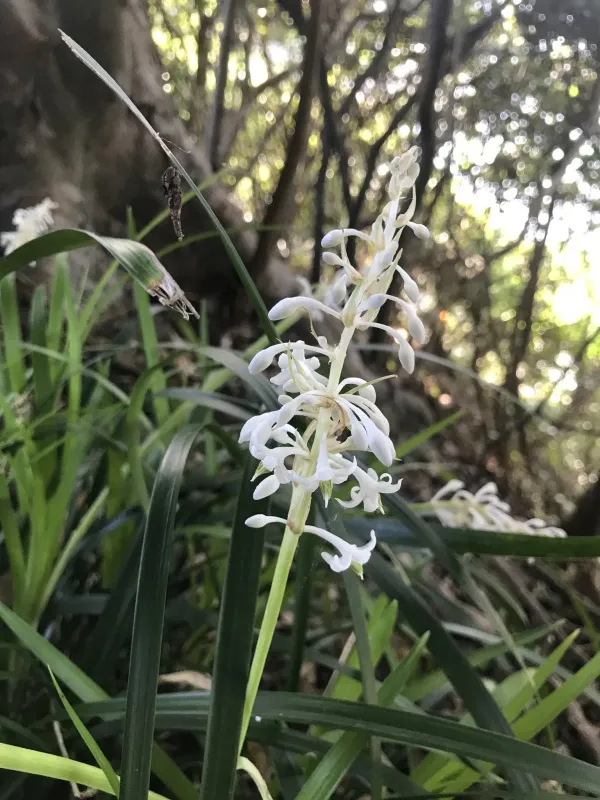
Botanically, the plant forms thick clumps of arching, dark green, grass-like leaves. During late summer and autumn, it produces spikes of drooping, bell-shaped flowers that are followed by deep blue or purple berries, adding seasonal interest to the landscape.
This species thrives in partial to full shade, making it an excellent groundcover for locations where traditional grasses fail. It prefers a temperate climate and requires protection from harsh, drying winds and direct midday sun, which can scorch the foliage.
The soil should be consistently moist but well-draining, with a rich organic composition. While it can adapt to various soil types, a slightly acidic, humus-rich medium promotes the most vigorous growth and helps the plant maintain its dark coloration.
In terms of care, maintenance is relatively low once the plant is established. Annual fertilization with a balanced liquid fertilizer during the spring growth flush supports the development of new leaves and ensures a healthy, dense appearance throughout the season.
Main diseases and pests
Ophiopogon jaburan is generally pest-resistant, but it is not immune to physiological stress caused by environmental factors. Root rot is the most common issue, usually resulting from heavy, waterlogged soils that prevent proper root respiration.
Slugs and snails can cause significant aesthetic damage by chewing on the foliage, especially in moist and cool garden environments. Using organic iron-based slug pellets or barriers can effectively control these pests during the peak growing season.
Fungal leaf spots may appear if the air circulation around the clumps is inadequate. Pruning old or damaged leaves during the dormant season helps to improve airflow and reduces the risk of pathogens settling on the plant tissues.
Scale insects and spider mites are potential threats, particularly when the plant is grown indoors or in greenhouse conditions. Periodic inspection of the foliage and washing with insecticidal soap are recommended as preventive measures.
Maintaining proper hygiene by removing dead plant matter from the base of the clumps is vital. This practice prevents the build-up of decaying material that can harbor pests and promote the growth of harmful fungi during periods of high humidity.