
Mondo grass
Ophiopogon japonicus (L. f.) Ker Gawl.
Description
Growing requirements
Ophiopogon japonicus, commonly known as Mondo grass, is a perennial flowering plant belonging to the Asparagaceae family. It is native to East Asia, primarily inhabiting shaded forests, woodlands, and grassy slopes in Japan, Korea, and China.
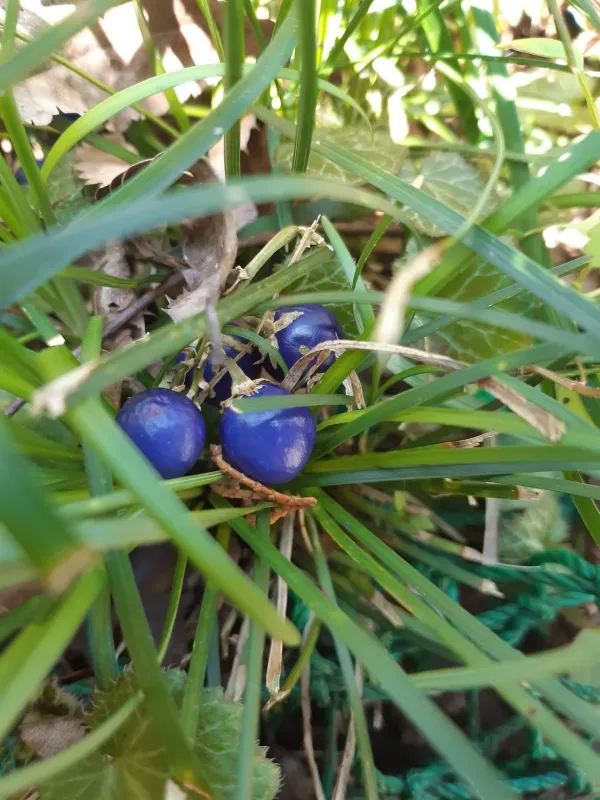
The plant features tufted, dark green, grass-like leaves that grow from a thick root system. Some varieties produce small, lavender to white flowers followed by deep blue berries, adding to its visual appeal in landscape design.
This species thrives in partial to full shade, making it an excellent choice for areas where traditional turf grass struggles to grow. It prefers well-drained, fertile soil that remains consistently moist but not waterlogged to maintain its deep color and density.
Agrotechnical maintenance includes regular watering during dry spells and periodic division of clumps to rejuvenate older plantings. It is relatively low-maintenance, requiring minimal fertilization and pruning once established in an appropriate environment.
Beyond its landscape value, Ophiopogon japonicus is historically significant in traditional medicine. The tuberous roots are harvested and processed for their medicinal properties, often used in remedies intended to treat respiratory or inflammatory conditions.
Main diseases and pests
Slugs and snails are the most common pests affecting this plant, as they frequently feed on the succulent foliage during damp weather. Implementing barrier methods or using organic baits can help protect the aesthetic appearance of the ground cover.
Root rot is the primary disease risk, occurring when the soil remains too wet for extended periods, preventing oxygen from reaching the roots. To prevent this, ensure that the planting site has excellent soil drainage and avoid heavy soil compaction around the root zone.