
Oncosperma tigillarium
Oncosperma tigillarium
Description
Sowing dates
The propagation of Oncosperma tigillarium is primarily achieved through seeds. Freshly collected seeds require soaking to facilitate and accelerate the germination process.
Sowing should ideally occur during periods of consistently high temperatures, as the seeds are sensitive to environmental fluctuations. A lightweight, well-draining substrate rich in organic matter is recommended.
Germination can be a slow process, potentially taking several months. Maintaining high humidity and consistent warmth is crucial, while preventing waterlogging which can lead to seed rot.
Young seedlings require partial shade, as intense direct sunlight can scorch the foliage. Transplanting to a permanent location is best performed once the plant has established a few true leaves.
This palm species is known for its slow initial growth rate, which requires patience when establishing new stands or plantations.
Growing requirements
Oncosperma tigillarium belongs to the Arecaceae family and is native to the tropical regions of Southeast Asia. It thrives in coastal areas, swamps, and lowland forests.
The plant has high water requirements but necessitates excellent soil drainage to prevent root diseases. It prefers fertile, loamy soils that can retain moisture without becoming stagnant.
Climatic conditions must remain within the tropical range, as temperatures below 15 degrees Celsius can be detrimental to the health and survival of young palms.
High relative humidity is essential for optimal growth, mimicking its natural rainforest habitat. Supplemental irrigation may be required in regions with distinct dry seasons.
While the palm tolerates partial shade, it thrives best when provided with ample dappled sunlight for consistent biomass accumulation.
Yield
The primary economic use of Oncosperma tigillarium is its high-quality timber, which is exceptionally durable and resistant to decay.
The trunks are traditionally used in stilt-house construction, decking, and tool handle production. Its strength in humid environments makes it a preferred local building material.
Young shoots and certain fruit parts have limited applications in local traditional medicine and cuisine, though these are secondary to its timber value.
Yield efficiency depends on management practices, such as plant density and thinning. The palm's clumping (multi-stemmed) habit allows for sustainable, selective harvesting.
Its aesthetic value also contributes to the agricultural economy in tropical regions through usage in high-end landscaping and eco-tourism resorts.
Main diseases and pests
Fungal diseases are a major concern for this species, especially when plants are stressed by waterlogged soils or inadequate air circulation.
Pests, particularly palm weevils, pose a significant threat by boring into the growing points and trunks, causing structural damage and potential tree death.
Scale insects and spider mites may infest the fronds, particularly when environmental humidity is not maintained at sufficiently high levels.
Bacterial infections can lead to heart rot, which is often fatal. Preventive measures include regular sanitation and the use of appropriate fungicides when necessary.
Maintaining a healthy, well-ventilated growing environment is the best defense against the majority of common pest and pathogen outbreaks.
Harvesting
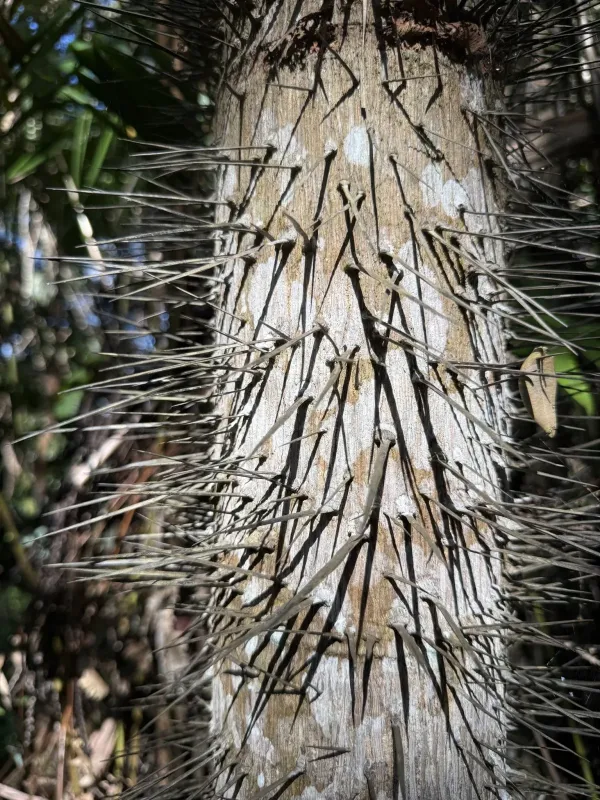
Harvesting requires extreme caution, as the trunks are covered in sharp, formidable spines that can cause severe injury if not handled with protective gear.
Selective harvesting is the standard practice, where only the mature, strongest trunks are removed from a clump, ensuring the rootstock remains for further growth.
The timing of the harvest is determined by the trunk's diameter and the maturation of the wood fibers, usually requiring several years of growth.
Post-harvest processing involves stripping the spines and cleaning the outer fibers to protect the logs from insect colonization during transport.
Efficient supply chain management is necessary to ensure the longevity of the timber, as improper storage in damp conditions can still affect long-term durability.