
Oeoniella polystachys
Oeoniella polystachys
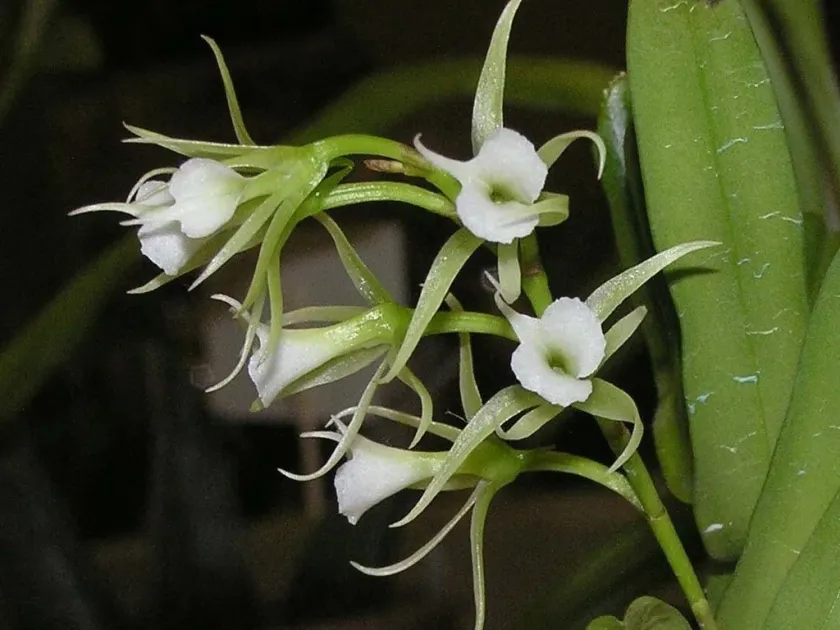
Description
Growing requirements
Oeoniella polystachys is a monopodial epiphytic orchid belonging to the Orchidaceae family. It is native to the Mascarene Islands, Seychelles, and Madagascar, where it grows in humid tropical forests.
To cultivate this species successfully, one must replicate its natural tropical habitat. It requires high relative humidity and a temperature range of 20°C to 28°C throughout the year, with sufficient ventilation.
Light intensity is crucial; the plant prefers bright, filtered sunlight. Excessive direct sun can cause leaf necrosis, while insufficient light prevents the plant from producing its characteristic spikes.
The potting medium must be porous and well-draining, typically consisting of bark, perlite, and sphagnum moss. This allows the roots to breathe and prevents them from remaining soggy for extended periods.
Regular fertilization with a balanced, diluted orchid fertilizer is necessary during the active growing season. During the cooler months, the frequency of watering should be reduced to mimic natural seasonal cycles.
Main diseases and pests
Root rot caused by fungal pathogens is the most common threat to Oeoniella polystachys. It typically occurs due to poor aeration of the potting media and excessive water retention in the container.
Spider mites are a significant pest, particularly in dry indoor environments. They pierce leaf tissues and drain fluids, leaving small spots and causing general decline in plant vigor.
Scale insects and mealybugs can infest the orchid, hiding in the leaf axils. These pests reproduce quickly and can weaken the plant, making it susceptible to secondary viral or fungal infections.
Management involves using systemic insecticides specifically formulated for ornamental plants. It is essential to monitor the plant closely, especially during the transition of seasons when pests are most active.
Proper hygiene, such as sterilizing tools before pruning and isolating new plants, is fundamental to maintaining a disease-free collection. Preventive measures drastically reduce the need for heavy pesticide use.