
Ochrosia oppositifolia
Ochrosia oppositifolia
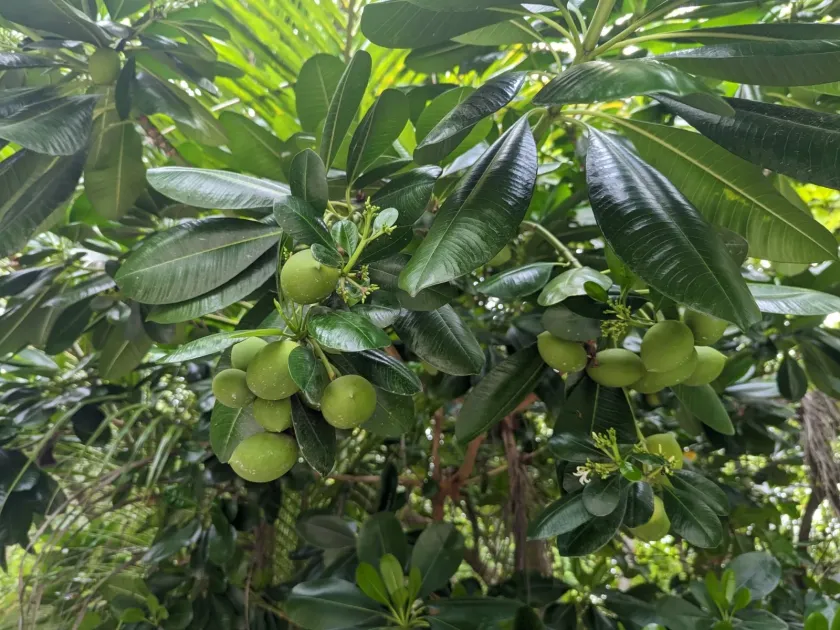
Description
Growing requirements
Ochrosia oppositifolia belongs to the Apocynaceae family. This evergreen tropical tree is native to the coastal regions of the Pacific and Indian Oceans, including Indonesia, the Philippines, and various islands of Polynesia.
The culture prefers specific climatic conditions typical of humid tropical zones. It requires high average annual temperatures with minimal seasonal fluctuations and a significant amount of rainfall throughout the year.
The plant exhibits high salt tolerance, allowing it to thrive in coastal sandy soils and coral limestone. Optimal growth is achieved on well-drained, organic-rich substrates with a neutral to slightly alkaline pH.
Botanically, the plant is a tree characterized by a dense crown and opposite leaf arrangement. Its leathery leaf blades are an adaptation that helps the tree conserve moisture and withstand intense solar radiation in tropical climates.
The economic use of the species is primarily centered on local traditional medicine and construction. The wood of the Ochrosia is valued for its durability, while the bark and fruits contain alkaloids that are currently being studied for their potential pharmacological properties.
Main diseases and pests
The primary threats to this culture are associated with specific tropical pests, such as scale insects and mealybugs, which damage young shoots and leaves, hindering the tree's development.
The tree is susceptible to root fungal diseases if water stagnation occurs, particularly if the soil lacks proper drainage during periods of heavy monsoon rainfall.
When cultivated on a larger scale, there is a significant risk of leaf spot diseases caused by pathogens that are well-adapted to the warm and humid environments of the tropics.
Disease prevention relies on strict adherence to good agricultural practices: avoiding over-saturation of the soil and ensuring adequate air circulation through the canopy to reduce humidity.
In its natural habitat, the tree may also suffer from mechanical damage caused by strong winds and cyclones, making the use of natural windbreaks essential for plantation establishment.