
Nicotiana thyrsiflora
Nicotiana thyrsiflora
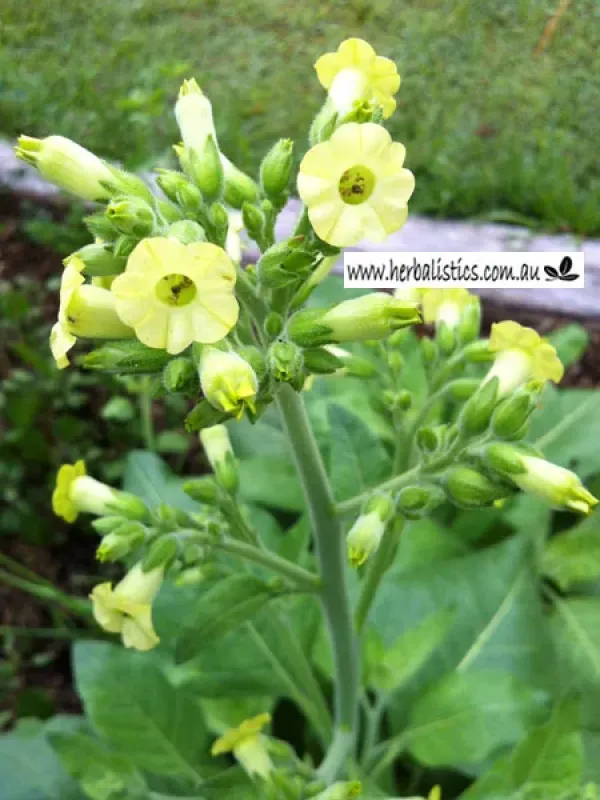
Description
Sowing dates
Nicotiana thyrsiflora, a member of the Solanaceae family, is typically propagated via seeds, which require specific conditions for successful germination.
Seeds should be sown indoors in late winter or early spring using a sterile, well-draining seed-starting mix to prevent damping-off disease.
Surface sowing is mandatory, as the seeds are minute and require light to break dormancy, covered only by a fine dusting of vermiculite.
A consistent temperature range of 20–22°C (68–72°F) must be maintained, ideally utilizing a heat mat to ensure uniform development during the first few weeks.
Seedlings should be transplanted outdoors only after all danger of frost has passed, ensuring they are properly hardened off to withstand outdoor conditions.
Growing requirements
This species thrives in full sun, requiring at least six to eight hours of direct sunlight daily to promote vigorous vegetative growth and flowering.
Well-drained, fertile soil enriched with decomposed organic matter is essential for sustaining the nutritional needs of this high-performing crop.
Soil pH levels should ideally range between 6.0 and 7.0, providing the optimal environment for macro and micronutrient uptake from the growing medium.
Watering practices must be consistent; while the plant requires regular hydration, waterlogging must be avoided to prevent root and crown rot issues.
Space the plants adequately to ensure good air circulation, which reduces the humidity around the foliage and minimizes the risk of opportunistic fungal pathogens.
Yield
Yield potential in Nicotiana thyrsiflora is heavily dependent on management practices such as topping, which redirects plant energy to foliage or seed development.
Regular fertilization with balanced NPK ratios during the active growth phase significantly impacts the total biomass production at the end of the season.
Harvesting efficiency is maximized when the crop is monitored for signs of maturity, such as the gradual yellowing of the lower leaves or drying seed capsules.
Under optimal horticultural conditions, the plant displays a robust architectural habit, contributing to both its aesthetic and potential utilitarian value.
Proper post-harvest drying is necessary to preserve the quality of the harvested materials, especially when cultivating for specialized secondary metabolites.
Main diseases and pests
Common pests include aphids, whiteflies, and thrips, which are known to be vectors for various phytopathogenic viruses affecting the Solanaceae family.
Powdery mildew represents a frequent fungal threat, appearing as a whitish dust on leaves, particularly in climates with high humidity and poor ventilation.
Root rot, often caused by pathogens like Pythium or Phytophthora, can quickly devastate a stand if drainage systems are inadequate or if soils remain saturated.
Integrated Pest Management (IPM) strategies, including the use of neem oil or biological control agents, are recommended for maintaining plant health.
Crop rotation is a critical cultural practice; avoid planting Nicotiana thyrsiflora in fields previously used for other nightshades to interrupt pest lifecycles.