
Nicotiana pauciflora
Nicotiana pauciflora
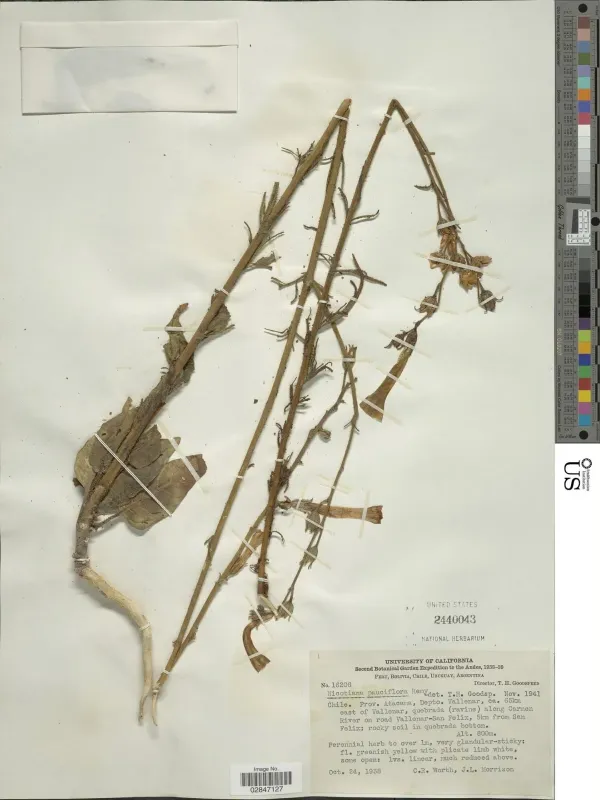
Description
Growing requirements
Nicotiana pauciflora is a distinct species within the genus Nicotiana, belonging to the Solanaceae family. Known for its specific adaptation to arid environments, this plant represents a niche botanical subject that offers valuable insights into the resilience of the nightshade family.
The species originates from the rugged, high-altitude regions of the Andes in South America. It has evolved to thrive in rocky, nutrient-poor substrates, demonstrating a high tolerance for environmental stressors that would typically inhibit the growth of standard agricultural crops.
Regarding cultivation requirements, the plant demands excellent drainage and high light intensity. It is sensitive to soil saturation and thrives in conditions that mimic its native mountain habitat, characterized by sharp diurnal temperature changes and low humidity levels.
Botanically, it is identified by its reduced flower count, which is a physiological trait reflecting its resource-conserving evolutionary strategy. The plant develops a robust root system capable of penetrating dense soil layers to access moisture, which is a key adaptation for survival in arid climates.
In terms of agricultural utility, Nicotiana pauciflora is primarily of interest to breeders and botanical research institutions. Its genetic traits are studied to identify markers for drought resistance, which could be integrated into future cultivars of commercially significant tobacco varieties.