
Nicotiana langsdorffii
Nicotiana langsdorffii
Description
Sowing dates
Seeds of Nicotiana langsdorffii should be sown indoors in late March or early April to ensure a strong start for the long vegetation cycle.
Since the seeds are extremely small, they should be surface-sown on moistened potting mix without covering them with soil, as they require light to germinate.
Maintain a stable temperature of 20–22 degrees Celsius and cover the trays with plastic wrap to create a humid environment until the seedlings emerge.
Once the seedlings develop their first true leaves, they should be pricked out into individual pots to allow for adequate root expansion.
Transplanting into the garden should only take place after the last spring frost, ensuring the young plants are hardened off beforehand.
Growing requirements
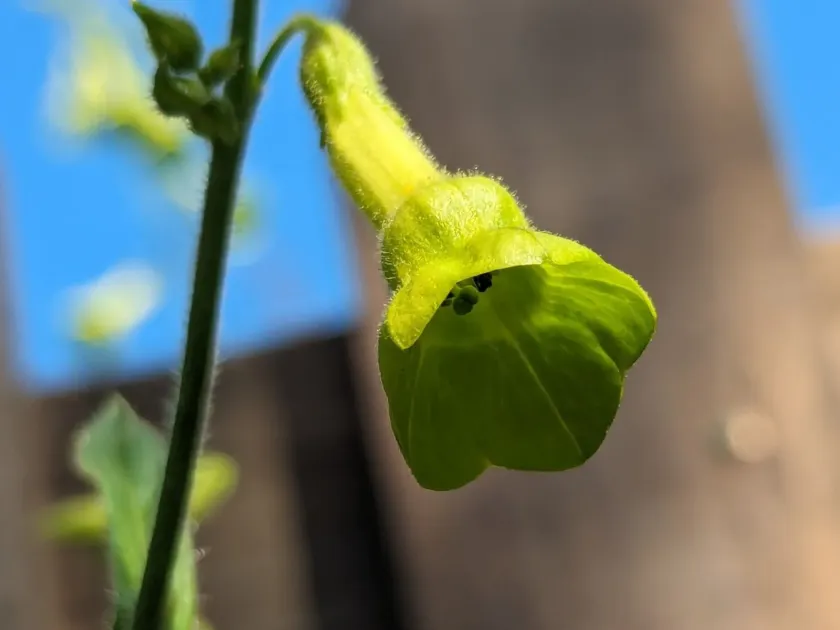
Nicotiana langsdorffii is a member of the Solanaceae family, admired for its elegant, bell-shaped green flowers that provide a unique aesthetic.
The plant thrives in full sun, which is essential for maintaining a compact growth habit and encouraging the development of numerous flower stalks.
It prefers well-drained, fertile soil rich in organic matter to sustain its rapid growth during the warmer summer months.
Regular watering is necessary, though care should be taken to keep the soil moist but not waterlogged to prevent root rot issues.
Occasional application of liquid fertilizer rich in phosphorus and potassium will boost flower production and ensure healthy leaf growth.
Main diseases and pests
The primary pests affecting this species are aphids, spider mites, and thrips, which tend to infest the plants during periods of low humidity.
Fungal diseases like powdery mildew can occur if plants are placed too close together or if overhead watering keeps the foliage constantly damp.
Preventive measures include spacing the plants adequately to promote air circulation and avoiding excessive nitrogen fertilization that creates soft, vulnerable tissue.
Monitoring the plants regularly allows for the early detection of pests, enabling the use of soft soap sprays or organic insecticides when necessary.
Keeping the surrounding area free of weeds is crucial, as many common weeds serve as hosts for viruses that can affect the Solanaceae family.
Harvesting
Nicotiana langsdorffii is primarily utilized in horticulture as a decorative plant, often used to add texture and a calming green tone to flower borders.
The plants bloom continuously from mid-summer until the first frosts, providing an extended visual interest in both garden beds and patio containers.
Seed harvest is performed by collecting the capsules once they turn brown but before they split, allowing for storage in a cool, dry location for next season.
In floral design, the flower spikes are highly appreciated for their longevity in vases and their ability to complement a variety of other garden blooms.
At the end of the season, remove the spent plants from the garden and clear the soil, incorporating fresh compost to prepare for the following year's planting.