
Myoporum laetum
Myoporum laetum G. Forst.
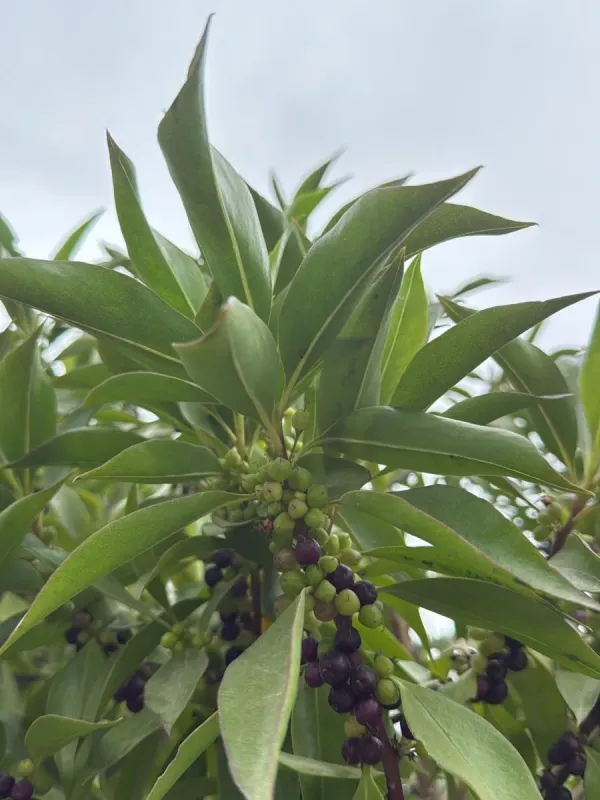
Description
Growing requirements
Myoporum laetum, commonly known as Ngaio, is a fast-growing evergreen shrub or small tree belonging to the Scrophulariaceae family. Native to New Zealand, it is prized for its hardy nature and attractive, oil-gland-dotted foliage.
The plant thrives in well-drained soils and is exceptionally tolerant of saline conditions, making it an excellent candidate for coastal restoration and windbreak projects. It can adapt to both sandy and heavier soil textures provided there is no waterlogging.
It requires full sun to partial shade for optimal health. Once established, Myoporum laetum exhibits remarkable drought tolerance, which is a key agronomic feature for low-maintenance landscaping in Mediterranean climates.
Climatically, this species prefers mild winter temperatures. While it can withstand light frosts, it is not suited for regions with harsh, prolonged sub-zero temperatures, limiting its commercial cultivation to temperate and subtropical zones.
Cultural practices include occasional pruning to maintain a dense shape, especially when grown as a hedge. The plant responds very well to shearing, making it a versatile choice for formal garden structures and private windbreaks.
Main diseases and pests
Myoporum laetum is generally a robust plant with few significant disease concerns. However, it can occasionally suffer from root rot if planted in poorly drained soil where moisture remains stagnant for extended periods.
In terms of pests, scale insects and mealybugs are the primary threats. These pests can weaken young growth, so monitoring the underside of leaves and stems during the spring months is recommended for effective pest management.
Cultural control, such as ensuring adequate airflow between branches through strategic pruning, significantly reduces the risk of fungal infections. Avoid overhead irrigation in shaded areas to prevent humidity-related leaf spots.
Agronomists should note the toxicity of the plant. The foliage contains a toxin known as ngaione, which causes liver damage in livestock, particularly sheep and cattle. It should never be used as forage or planted in areas accessible to grazing animals.
Integrated pest management strategies focusing on early detection and biological control are usually sufficient. Large-scale chemical interventions are rarely required if the site selection and drainage are properly managed from the start.