
Common boobialla
Myoporum insulare R. Br.
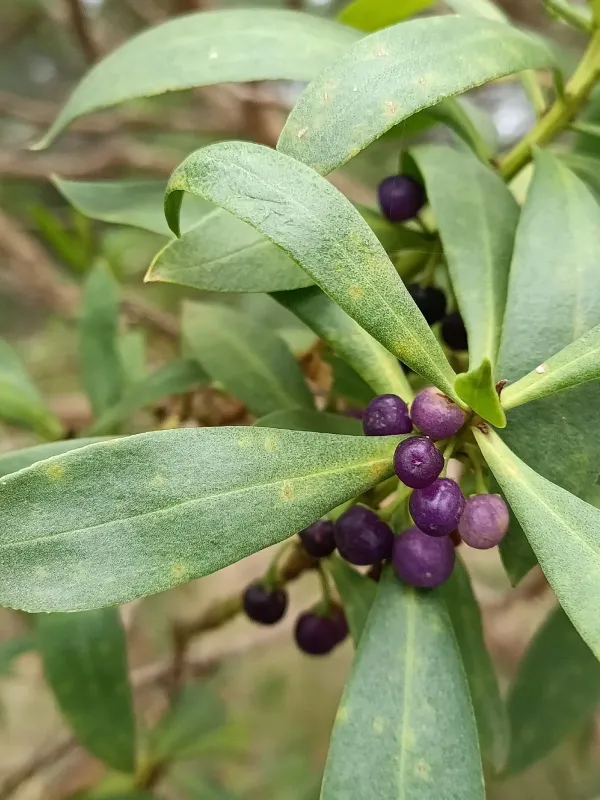
Description
Growing requirements
Common boobialla (Myoporum insulare) is a robust evergreen shrub belonging to the Scrophulariaceae family. Known for its rapid growth and dense, leathery foliage, it serves as a staple plant for coastal restoration projects and landscaping in challenging environments.
Native to Australia, this plant has adapted to harsh coastal conditions. It possesses thick, succulent-like leaves that help it retain moisture, allowing it to withstand extreme exposure to salt spray and drying winds that would damage many other species.
The plant thrives in full sun but can tolerate partial shade. It is not overly picky regarding soil type; it performs well in sandy, rocky, or clay-based soils, provided they offer adequate drainage to prevent saturation of the root system.
In terms of moisture requirements, once established, the common boobialla is highly drought-tolerant. During the initial growth phase, consistent watering is recommended to ensure the root system penetrates deeply into the soil profile.
Agricultural and landscape use is primarily focused on soil stabilization and the creation of windbreaks. Because it responds exceptionally well to pruning, it is frequently used to form dense, privacy-providing hedges that require very little long-term maintenance.
Main diseases and pests
Common boobialla is generally considered a low-maintenance plant with few serious health issues, provided it is planted in an environment that meets its basic needs for drainage and light.
The most common biological threats include mild outbreaks of powdery mildew, especially in locations where high humidity persists for long periods without adequate airflow around the plant canopy.
Insect pests, including scale insects and spider mites, may occasionally colonize the plant. These are usually controlled by ensuring the plant is not under extreme stress from environmental factors.
Root rot is the most significant threat to the survival of the shrub, usually caused by poor drainage or excessive irrigation during the colder, dormant months of the year.
To keep the shrub healthy, it is essential to monitor for signs of dieback and ensure that the surrounding soil does not become waterlogged, which is the primary cause of decline in this species.