
Ctenanthe oppenheimiana
Ctenanthe oppenheimiana (E. Morren) K. Schum .
Description
Growing requirements
Ctenanthe oppenheimiana is an ornamental herbaceous perennial belonging to the Marantaceae family. Native to the tropical rainforests of Brazil, it naturally thrives in the understory of dense forests, adapted to low-light and high-humidity environments.
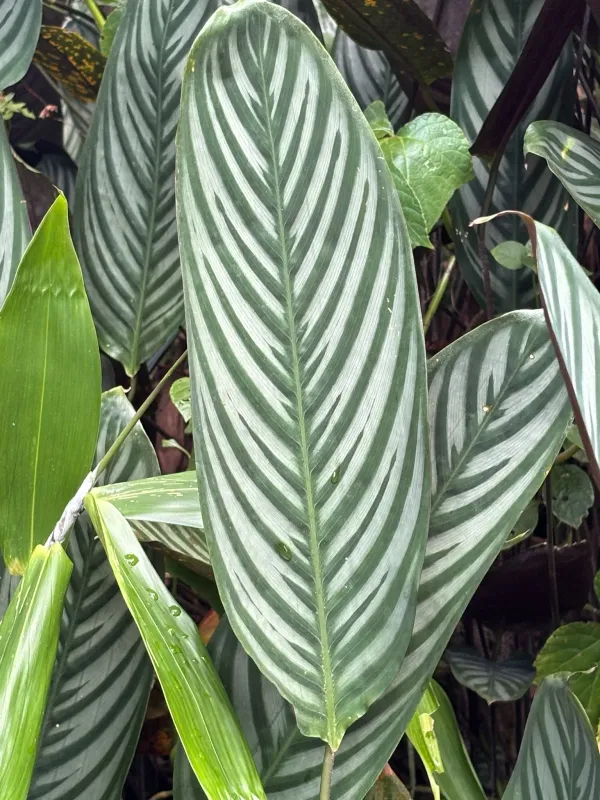
The plant is known for its architectural foliage, featuring elongated, leathery leaves with striking silver-green variegation and deep purple undersides. It grows from rhizomes and can reach a mature height of 60 to 90 centimeters under optimal conditions.
Climate requirements involve maintaining temperatures between 20°C and 25°C. The species is highly sensitive to cold drafts and rapid temperature fluctuations, which can negatively impact its physiological development and growth rates.
The soil should be a well-draining, peat-based mix with high organic content, maintaining a slightly acidic pH level. Proper aeration is crucial, as the root system requires significant oxygen exchange to prevent metabolic stress and maintain healthy growth.
Lighting must be bright but indirect. Direct sunlight causes leaf scorching and fades the characteristic variegation of the foliage. Consistent humidity is a critical factor; the plant thrives when ambient humidity levels are maintained above 60 percent.
Main diseases and pests
Spider mites are the most common agricultural pest affecting Ctenanthe. These thrive in warm, dry environments and create fine webbing, which can lead to leaf senescence if not treated with appropriate acaricides or humidity control.
Scale insects present a threat by attaching to leaf stems and veins, extracting plant sap. Their presence is marked by small bumps on the foliage, which can cause significant stunted growth if left unmonitored.
Root rot, primarily caused by Phytophthora or Pythium species, occurs due to waterlogged soil conditions. This fungal disease leads to the decay of rhizomes and requires strict drainage management and fungicide treatment for control.
Mealybugs can be identified by the white, waxy deposits left in the leaf axils. These pests weaken the plant by feeding on phloem sap and are typically managed through mechanical removal or systemic insecticides.
Physiological disorders, such as tip burn, often result from poor water quality, specifically the accumulation of salts and minerals from tap water. Using distilled or filtered water is recommended to ensure long-term vitality.