
Ctenanthe marantifolia
Ctenanthe marantifolia (Vell.) J. M. A. Braga & H. Gomes
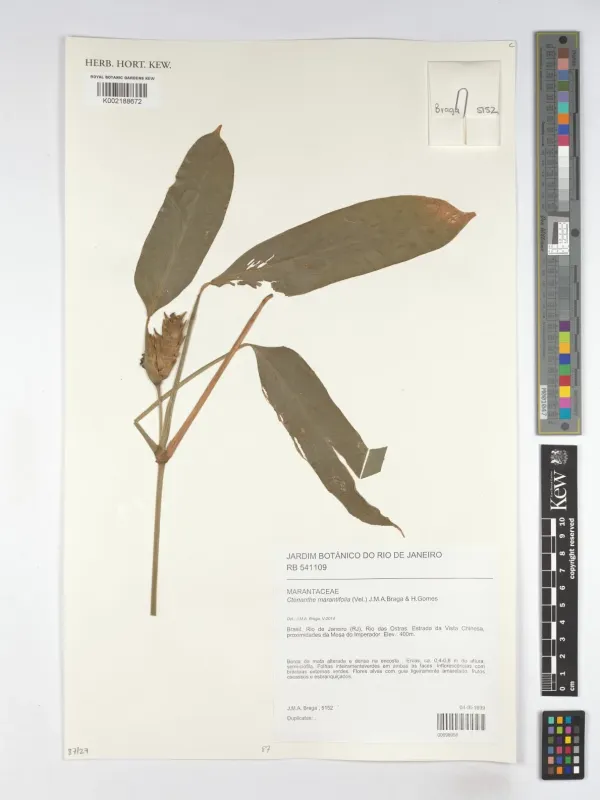
Description
Growing requirements
Ctenanthe marantifolia is a perennial herbaceous plant belonging to the Marantaceae family. Native to the rainforests of Brazil, it thrives in the understory of tropical environments, where it is shielded from direct sunlight and protected by high humidity levels.
Botanically, this species is characterized by its broad, patterned leaves which exhibit 'prayer plant' behavior, folding upwards at night. The plant typically reaches a height of 30 to 60 centimeters, forming clumps through its creeping rhizomes which allow it to spread horizontally.
The climate requirements for this plant necessitate consistently warm temperatures, preferably between 20°C and 25°C. Exposure to sudden drops in temperature or cold drafts can cause leaf curl and immediate damage to the delicate cellular structure of the foliage.
For soil media, it is essential to use a well-draining, slightly acidic mixture. A combination of peat moss, perlite, and pine bark creates the ideal structure, allowing for adequate oxygen circulation around the root system while retaining necessary moisture.
Humidity management is the most critical aspect of the plant's agrotechnology. In indoor environments, keeping humidity levels above 60% through the use of trays filled with pebbles and water or automated humidifiers is necessary for optimal leaf development.
Main diseases and pests
Spider mites are the most common pest associated with Ctenanthe marantifolia, particularly in environments with low air humidity. These pests feed on the cell sap, resulting in stippled yellow foliage and fine webbing across the undersides of the leaves.
Mealybugs can also infest the plant, hiding in the leaf axils and stems. These insects create white, waxy deposits and can significantly weaken the plant if left unchecked, leading to stunted growth and leaf drop.
Root rot caused by fungal pathogens such as Pythium or Phytophthora often results from overwatering and compacted soil. Signs of this condition include yellowing leaves and a blackened, mushy base of the stems, often accompanied by an unpleasant odor.
Leaf spot diseases may manifest as brown, irregular patches on the foliage due to overhead watering. Keeping the foliage dry and ensuring good air circulation around the plant is the most effective way to prevent these fungal infections from spreading.
To maintain plant health, it is recommended to apply a mild fungicide spray as a preventative measure during periods of high humidity. Additionally, pruning damaged or necrotic leaves helps to lower the risk of fungal spread throughout the entire plant colony.