
Ctenanthe setosa
Ctenanthe setosa (Roscoe) Eichler
Description
Growing requirements
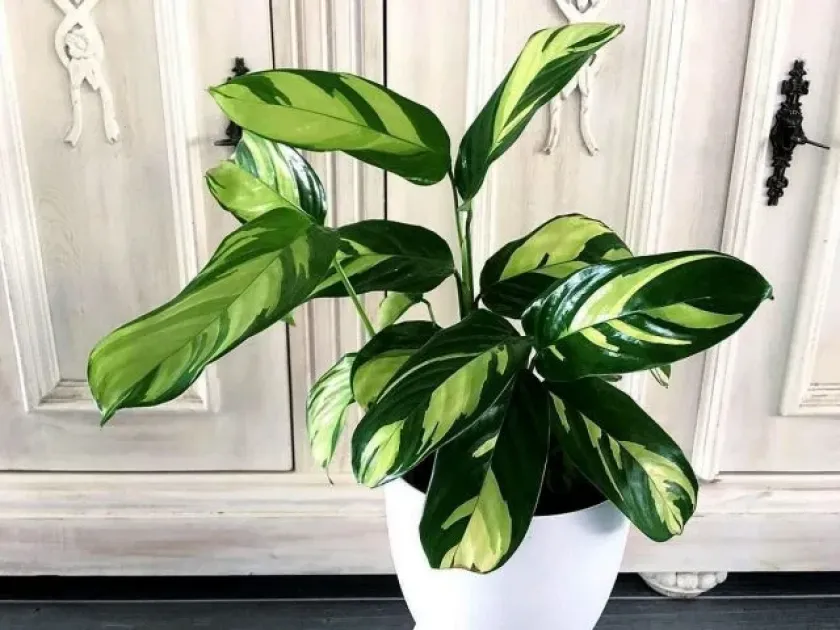
Ctenanthe setosa, a member of the Marantaceae family, is a perennial herb native to the tropical rainforests of Brazil. It is widely recognized for its striking foliage, characterized by long, lanceolate leaves featuring silver-green patterns and prominent bristly hairs on the stalks.
The plant thrives in environments that mimic its natural habitat, requiring high humidity levels above 60% and consistently warm temperatures between +20°C and +25°C. Exposure to cold drafts or temperatures dropping below +16°C can result in severe foliage damage or dormancy.
For optimal growth, Ctenanthe requires a well-draining, slightly acidic soil mixture. A combination of peat moss, perlite, and humus creates the ideal structure, allowing roots to breathe while maintaining enough moisture to support the plant's robust tropical development.
Agricultural management for this species focuses on indirect lighting. While it prefers bright light, direct sun will bleach the leaf color and cause the margins to burn. In horticultural settings, it is valued as a decorative foliage plant for indoor landscaping and greenhouse displays.
Propagation is primarily performed through division of the rhizomes. This is best achieved during the repotting process, ensuring each segment has healthy roots and foliage. Consistent monitoring of soil pH and nutrient levels is essential for maintaining the vibrant pattern of the leaves.
Main diseases and pests
Spider mites are the most critical pest for Ctenanthe setosa, thriving in the dry indoor air. Infestations often manifest as fine webbing and speckled leaf surfaces, requiring immediate treatment with appropriate miticides or increased humidity and mechanical cleaning.
Root rot, driven by overwatering and poor drainage, remains the most frequent pathology affecting this culture. If the substrate remains waterlogged, the rhizomes begin to decay, leading to yellowing leaves and a general decline in the plant's structural integrity.