
Neoraimondia herzogiana
Neoraimondia herzogiana
Description
Growing requirements
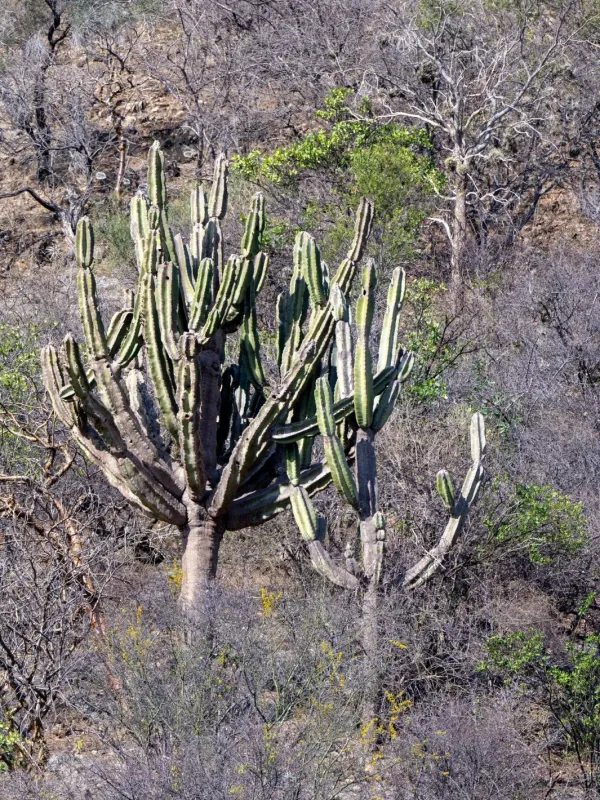
Neoraimondia herzogiana belongs to the Cactaceae family. This impressive species is known for its tree-like, columnar growth habit, which allows it to dominate arid landscapes with its sturdy and ribbed structure.
The plant is native to the dry regions of Bolivia. It has evolved to thrive in environments with minimal rainfall and high solar radiation, often found in rocky valleys where other vegetation struggles to survive.
To cultivate this species successfully, full sun exposure is mandatory. Providing high-intensity light is essential for maintaining the plant's structural integrity and preventing etiolation, which is common in low-light indoor environments.
The ideal substrate must have excellent drainage properties. A coarse mix of mineral components, such as pumice, perlite, and coarse sand, is recommended to ensure that water does not remain around the root system for extended periods.
Neoraimondia requires distinct seasonal changes in water availability. During the summer growth phase, water sparingly when the soil is completely dry, and maintain a completely dry environment throughout the winter dormancy period.
Main diseases and pests
The plant is highly susceptible to root and stem rot caused by stagnant water. Pests such as mealybugs and spider mites are common threats in greenhouses, requiring vigilant monitoring and professional intervention to maintain plant health.
Harvesting
In terms of economic and practical use, Neoraimondia herzogiana is primarily prized by succulent enthusiasts and botanical institutions. While it produces fruits, its primary utility remains ornamental and educational within the context of arid-land landscaping.