
Neoraimondia arequipensis
Neoraimondia arequipensis
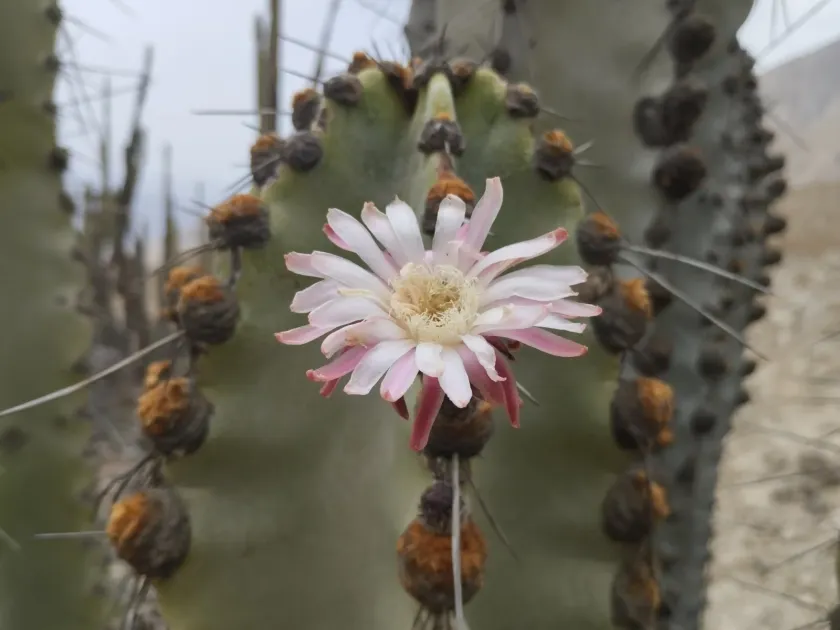
Description
Growing requirements
Neoraimondia arequipensis is a striking columnar cactus species belonging to the Cactaceae family. It is known for its massive growth habit and branched structure, which represents a significant botanical feature in arid ecosystems.
Originating from the coastal deserts and arid valleys of Peru, this species is highly specialized for survival in extreme environments. It thrives in regions characterized by high temperatures and sporadic, scarce rainfall.
The cultivation of this plant requires a highly porous and inorganic soil mix. A substrate consisting primarily of pumice, coarse sand, and volcanic grit ensures adequate aeration and prevents the risk of root rot during irrigation.
Proper light exposure is non-negotiable for this species. To maintain healthy, compact growth and ensure the natural development of spines, the plants should be kept under full sun or in very bright greenhouse conditions.
Seasonal temperature regulation is critical, especially during the dormancy phase. Keeping the cactus dry during the cooler months helps to mimic its natural cycle and prepares the plant for better growth in the following season.
Main diseases and pests
Fungal infections are the most significant threat to Neoraimondia when cultivated in suboptimal conditions. Excessive soil moisture, coupled with poor air circulation, leads to stem rotting and vascular tissue collapse.
Mealybugs are common pests that tend to aggregate within the dense spines and areoles. Regular monitoring and the application of targeted insecticides are necessary to manage infestations before they spread across the stem.
Spider mites can be particularly troublesome in hot, dry climates if the ambient humidity is too low. Their activity causes unsightly scarring on the epidermis, which can lead to permanent damage if left untreated.
Soil-borne pathogens can attack the root system, often unnoticed until the plant shows signs of structural decline. Using pasteurized soil and avoiding organic-heavy potting mixes helps to minimize this risk significantly.
Imbalanced nutrition, specifically high nitrogen levels, can cause rapid but weak tissue growth. Such growth is structurally unstable and significantly more susceptible to both mechanical damage and pest attacks.