
Neoporteria napina
Neoporteria napina
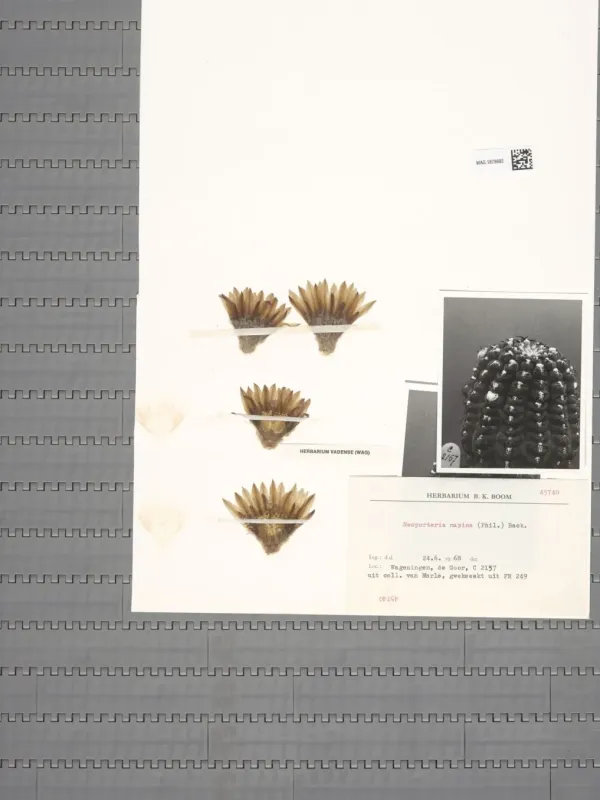
Description
Growing requirements
Neoporteria napina is a distinct species of the Cactaceae family, native to the arid landscapes of Chile. It is a slow-growing, globular cactus characterized by a significant taproot that allows it to store moisture effectively during prolonged droughts.
The plant possesses a unique morphology with a flattened, dark-colored stem that blends into the rocky terrain of its natural habitat. Its coloration serves as a protection mechanism against excessive solar radiation in high-altitude desert environments.
The cultivation of this species demands a highly mineralized, well-draining substrate. Using a mix of coarse sand, crushed volcanic rock, and minimal organic matter is essential to simulate its natural growing conditions and prevent water accumulation.
Proper light exposure is vital for maintaining the plant's health and compact shape. While it requires bright light, protection from the most intense midday sun in a greenhouse setting is often recommended to prevent epidermal scorching.
During the dormant winter season, the plant must be kept completely dry and in a cool environment. This winter rest is essential for the plant to conserve energy and initiate the flowering process during the subsequent spring season.
Main diseases and pests
The primary threat to Neoporteria napina is root rot, resulting from stagnant moisture in the root zone. Proper aeration of the potting medium and the use of terracotta pots can significantly mitigate the risk of fungal proliferation.
Pest management should focus on monitoring for spider mites, which thrive in dry indoor conditions and can damage the succulent's surface. Additionally, root mealybugs can cause significant stress, necessitating periodic inspection of the root system during repotting.