
Narcissus hedraeanthus
Narcissus hedraeanthus
Description
Growing requirements
Narcissus hedraeanthus is a rare, miniature bulbous plant belonging to the Amaryllidaceae family. Native to the mountain ranges of Spain, specifically the Sierra de Cazorla, this species is highly prized by alpine plant enthusiasts for its distinct appearance and compact growth habit.
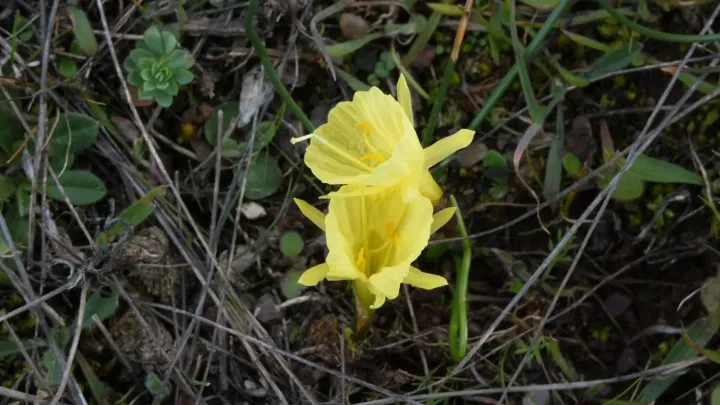
The plant typically reaches a height of 10–15 cm and features pale, nodding yellow flowers that provide a delicate look to any rock garden. Its foliage is narrow and glaucous, adapted to withstand the harsh conditions of its natural rocky habitats.
Cultivation requires specific conditions: a well-drained, gritty, or sandy substrate is essential to mimic mountain slopes. The site should receive ample sunlight in the early spring, while during the dormant summer period, the bulbs need to be kept dry to prevent rotting.
Proper agro-technique involves avoiding soil compaction. The addition of small stones or coarse grit to the planting hole facilitates water runoff and provides the necessary aeration for the root system, which is crucial for the longevity of the species.
Propagation is mainly achieved through the separation of offset bulbs. Due to the slow growth rate of this species, it is recommended to maintain stable conditions for several years without frequent disturbance to ensure consistent flowering cycles.
Main diseases and pests
Root rot is the most significant threat to Narcissus hedraeanthus, primarily caused by poor drainage and excessive moisture during the dormant phase. Providing a well-aerated planting site is the best preventative measure against soil-borne pathogens.
The Large Narcissus Fly (Merodon equestris) poses a major risk, as its larvae burrow into the bulbs and consume them from the inside. Inspection of bulbs before planting and the use of protective netting can significantly reduce the risk of infestation.
Aphids can cause damage to young shoots in early spring, leading to viral infections or stunted growth. Regular monitoring and the application of mild insecticidal soaps are recommended at the first signs of pest activity.
Slugs and snails often graze on the tender spring leaves of small Narcissus species. Using physical barriers, such as copper tape or crushed eggshells around the perimeter of the planting area, helps to protect the foliage from damage.
Fungal leaf spot diseases can occur during humid spring weather. Improving airflow around the plants and avoiding overhead watering are effective strategies to minimize the development of these unsightly and weakening conditions.