
Narcissus dubius
Narcissus dubius
Description
Growing requirements
Narcissus dubius is a perennial bulbous plant belonging to the Amaryllidaceae family. This species is native to the Mediterranean region, specifically flourishing in parts of southern France and eastern Spain.
The plant thrives in rocky, limestone-rich habitats. It is uniquely adapted to a climate cycle that features moist, cool winters followed by hot, dry summers during which the bulb remains dormant.
For cultivation, well-draining soil is a mandatory requirement. It is best to avoid heavy clay substrates as they hold excess moisture, which leads to bulb rot during the winter months.
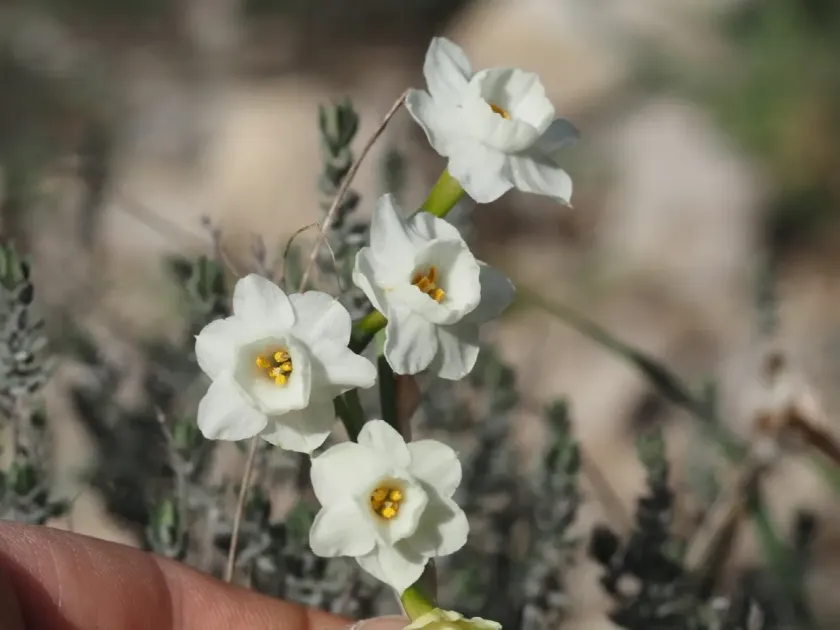
Botanically, it is recognized by its narrow, linear leaves and small, white flowers that appear in loose umbels. The flowers typically have a yellow cup and emit a delicate, pleasant fragrance.
This species is valued in ornamental gardening, particularly for rock gardens or wild-style plantings, due to its compact habit and ability to naturalize in appropriate Mediterranean-like environments.
Main diseases and pests
Fungal pathogens are the primary threat, with fusarium rot being the most common issue. This usually occurs when soil moisture levels are not managed correctly, causing the basal plate of the bulb to decompose.
The large narcissus fly is a significant pest. The larvae tunnel into the bulb, feeding on its tissues and destroying the plant's capacity for future growth and reproduction.
Bulb mites can cause extensive damage to the root system, especially when bulbs are stored in damp conditions or planted in soil that lacks sufficient aeration and drainage.
Slugs and snails may attack young foliage during early spring. While this rarely kills a mature bulb, heavy herbivory can weaken the plant and reduce its floral display for the following season.
Management strategies involve rigorous inspection of bulbs before planting, using systemic fungicides if necessary, and ensuring that the planting site has optimal light exposure and airflow.