
Bicolor daffodil
Narcissus bicolor
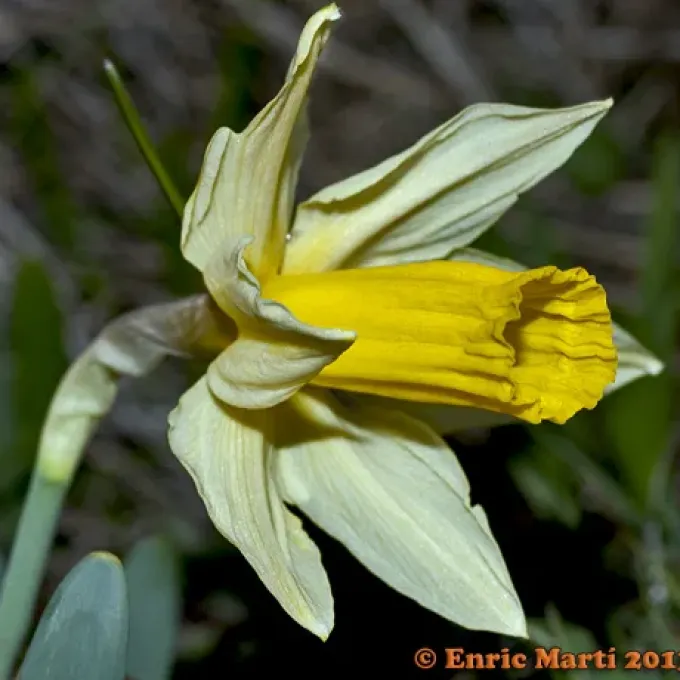
Description
Sowing dates
The bicolor daffodil (Narcissus bicolor), a member of the Amaryllidaceae family, is a perennial bulbous plant widely cultivated for its ornamental value. Propagation is typically achieved through the division of bulbs.
Planting should be carried out from late summer to mid-autumn, usually between late August and September. This timing allows the bulbs to establish a root system before the onset of winter dormancy.
In commercial agriculture, planting density varies depending on the bulb size, typically ranging from 60 to 100 bulbs per square meter to ensure optimal growth and flower production.
The planting depth should be determined by soil texture; bulbs are placed at 15–20 cm in light soils and 10–12 cm in heavier soils to balance temperature stability and growth efficiency.
Systematic bulb division is practiced every few years to maintain the vigor of the stock and to scale up the production of new plants for expansion.
Growing requirements
Bicolor daffodils thrive in locations with full sun to partial shade. Protection from strong winds is highly recommended to preserve the integrity of the long stems and prevent lodging.
Well-drained soil is a primary requirement for this crop. The species does not tolerate waterlogged conditions, which frequently cause the basal plates of the bulbs to rot.
Soil fertility is critical for high-quality blooms. Incorporating organic matter, such as well-rotted compost, into the soil before planting provides essential nutrients throughout the growing season.
While the plant is hardy, in regions with severe winters and little snow, applying a layer of mulch helps insulate the soil and protects bulbs from extreme temperature fluctuations.
Adequate moisture is essential during the bud development and flowering stages. Regular irrigation during dry springs is necessary to support optimal stem height and flower diameter.
Main diseases and pests
Fusarium rot is a significant threat to Narcissus bicolor, often causing bulbs to decay in the soil. Proper fungicide treatment of bulbs before planting is an effective preventative measure.
The narcissus bulb fly is a notorious pest whose larvae burrow into the bulb and consume its tissues. Strict monitoring and the use of insecticidal treatments are necessary to prevent infestations.
Viral diseases, such as the narcissus mosaic virus, cause stunted growth and foliage discoloration. Infected plants should be promptly identified and rogued from the field to prevent further spread.
Bulb mites can cause extensive damage to dormant bulbs during storage, especially if humidity levels are not properly managed within the storage facilities.
Integrated pest management, including crop rotation and the destruction of symptomatic plants, remains the most sustainable way to protect the crop against recurring threats.
Harvesting
Harvesting of the bulbs is performed once the foliage has turned yellow and died back, indicating that the plant has stored enough energy for the next season, typically in early summer.
Post-harvest, bulbs must be cleaned and air-dried in a shaded, well-ventilated area to prevent decay. Proper curing is essential for the long-term viability of the dormant bulbs.
For floral production, flowers are harvested when the buds are showing color but remain closed, which ensures maximum vase life and ease of transportation for commercial markets.
Storage conditions for harvested bulbs should be maintained at a cool and stable temperature (approx. 15–18 degrees Celsius) to ensure proper flower bud initiation for the following year.
With correct agricultural practices, a propagation rate of 1:3 to 1:5 per year is achievable, allowing producers to effectively increase their bulb stock annually.