
Napoleonaea talbotii
Napoleonaea talbotii
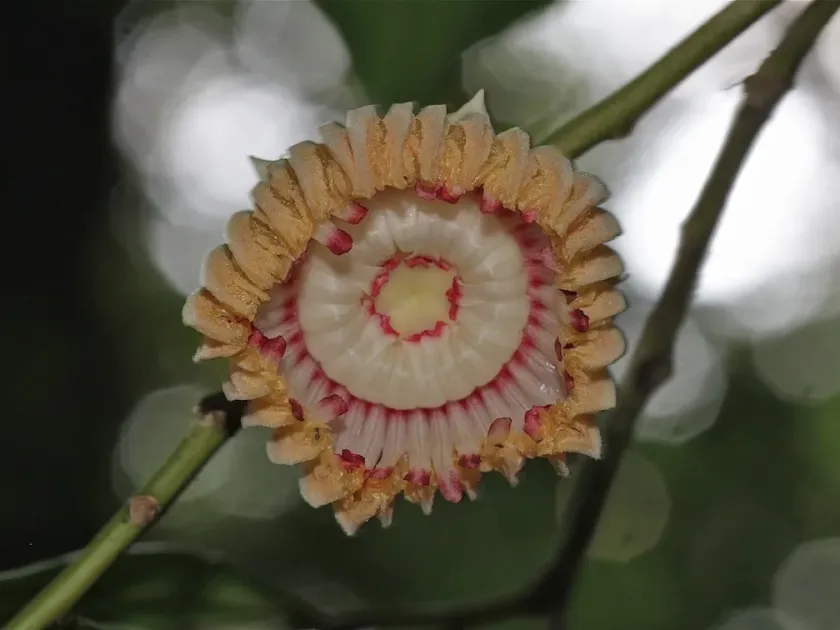
Description
Growing requirements
Napoleonaea talbotii is a distinct plant species belonging to the Lecythidaceae family. Native to the humid rainforests of West Africa, particularly found in Nigeria and Cameroon, it thrives under the canopy of dense tropical forests, requiring high humidity and shade.
The climatic conditions for this species are strictly equatorial. It requires consistently high temperatures throughout the year and protection from any form of frost. Successful cultivation necessitates specialized glasshouse environments where light intensity and humidity can be precisely monitored and adjusted.
Soil requirements for Napoleonaea talbotii center around high organic matter content and excellent drainage. The roots are sensitive to compaction and waterlogging; therefore, the planting medium should mimic the porous, leaf-litter-rich environment of the forest floor.
Botanically, the plant is renowned for its complex, showy flowers, which exhibit an intricate structure of staminodes. These floral displays are the primary reason for the plant's value in botanical collections, as they represent significant evolutionary adaptations for specialized pollination.
Regarding its economic utility, Napoleonaea talbotii is primarily a specimen plant for research and botanical conservation. It is not currently utilized as a mass-produced agricultural crop, but it remains a subject of interest for taxonomists and researchers specializing in the Lecythidaceae family.