
Napoleonaea imperialis
Napoleonaea imperialis
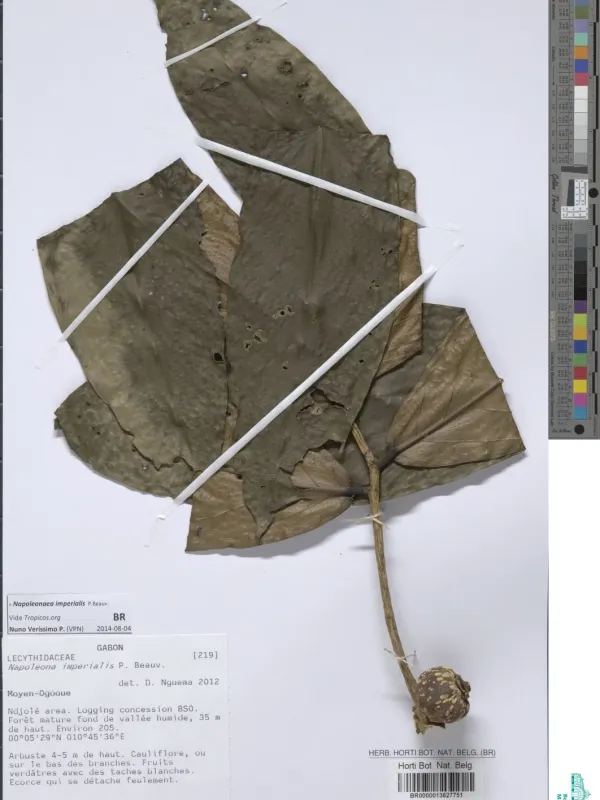
Description
Growing requirements
Napoleonaea imperialis is an evergreen shrub or small tree belonging to the Lecythidaceae family. It is native to the tropical rainforests of West and Central Africa, thriving in humid environments with high rainfall and stable year-round temperatures.
The plant typically grows in the understory of primary forests, where it benefits from high air humidity and shaded conditions. It reaches heights of 6 to 10 meters, exhibiting a dense canopy with smooth, leathery, dark green leaves.
For cultivation, the plant requires a frost-free environment with temperatures ideally ranging between +20°C and +30°C. It is sensitive to direct sunlight, especially in its juvenile stage, so partial shade is necessary to maintain foliage health.
The soil should be nutrient-rich, well-draining, and slightly acidic. Incorporating organic matter such as compost or leaf mold mimics its natural forest floor habitat and provides the necessary nutrients for healthy root development.
Water management is critical: the plant requires consistent moisture, but waterlogging should be strictly avoided. In greenhouse settings, frequent misting helps replicate the necessary atmospheric humidity for optimal gas exchange in the leaves.
Yield
The primary use of Napoleonaea imperialis is medicinal. Various parts of the plant, including the bark and roots, contain bioactive compounds such as saponins and alkaloids, which are traditionally used to treat inflammatory conditions and infections.
The fruits of the plant are edible and are locally harvested for consumption in parts of its native African range. While not a commercial staple crop, it holds significant cultural and nutritional value for local indigenous populations.
Botanically, the plant is famous for its intricate, cup-shaped flowers that display a vibrant array of colors. These flowers are highly adapted for specific insect pollination, which is essential for the production of viable seeds.
Future agricultural prospects for this species are largely tied to pharmaceutical research. As scientists continue to explore natural antimicrobial agents, the cultivation of Napoleonaea for medicinal extraction remains a niche but growing area.
Propagation is primarily achieved through seeds, which require immediate sowing after maturation due to their short lifespan. The use of specialized nursery conditions is necessary to ensure high germination rates and seedling survival.