
Nananthus vittatus
Nananthus vittatus
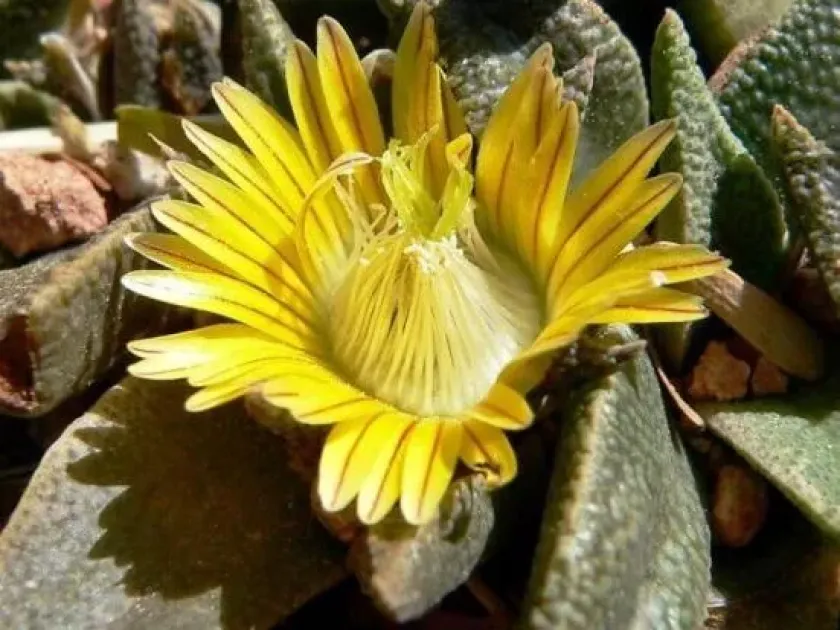
Description
Growing requirements
Nananthus vittatus is a perennial succulent belonging to the Aizoaceae family. Native to the arid regions of South Africa, this species is highly adapted to harsh, dry climates with poor soil conditions and intense sunlight exposure.
The plant features a distinctive tuberous taproot system that functions as a water storage organ. The leaves are succulent, often adorned with characteristic white markings, and form low-growing rosettes that are ideal for survival in rocky crevices.
Agricultural success with this species depends heavily on the soil structure. A highly porous, mineral-based substrate is mandatory to ensure rapid water drainage. A mix of coarse sand, crushed volcanic rock, and a small amount of grit is ideal for healthy root development.
This succulent thrives under bright, direct light. In an indoor setting, a south-facing window is usually required to maintain its compact shape. If light levels are insufficient, the plant will etiolate, becoming weak and susceptible to physiological stress.
Watering requirements follow a strict seasonal cycle. During the growing season, water should be applied only when the substrate is completely dry. A dry, cool dormant period during winter is essential to trigger the plant's natural life cycle and flowering potential.
Main diseases and pests
Overwatering is the primary cause of plant failure for Nananthus vittatus. Excessive moisture in the soil, combined with poor ventilation, almost inevitably leads to fatal root rot, which can destroy the tuberous system within a short period.
Mealybugs are the most common pests affecting this species. They hide in the tight leaf axils, making them difficult to detect early. Regular inspection and the application of suitable systemic insecticides are recommended for effective management.
Root mealybugs can pose a hidden threat, as they attack the tuberous root system underground. To prevent infestation, it is crucial to use sterilized potting media and maintain overall cleanliness in the growing area.
Fungal infections, such as those caused by Botrytis or various soil-borne pathogens, can occur when the environment remains too humid. Improving airflow and reducing air moisture levels are effective strategies to prevent the spread of these diseases.
Mechanical damage during repotting can also expose the plant to infections. Always allow the roots to callous before potting, and ensure that the substrate is not overly compacted, as this hinders gas exchange and increases the risk of plant disease.