
Nananthus aloides
Nananthus aloides
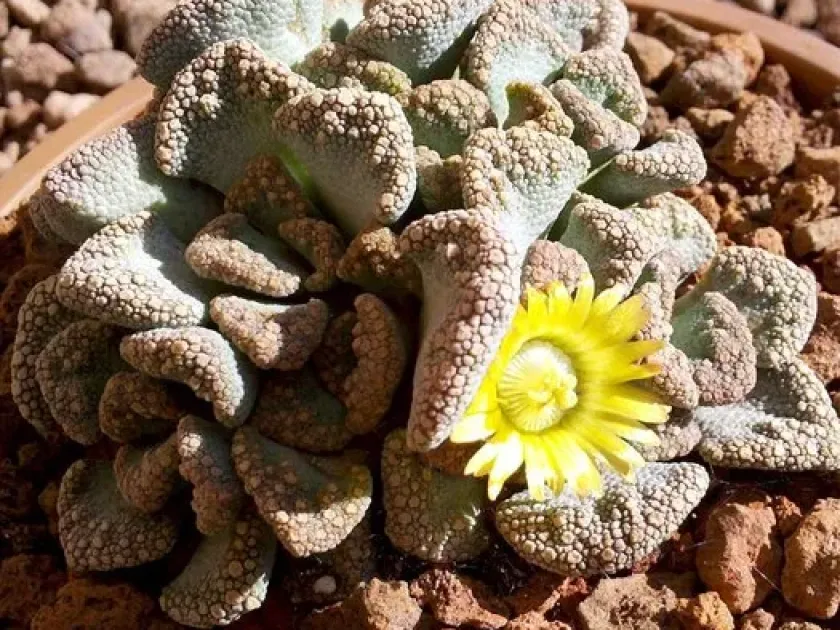
Description
Sowing dates
Sowing Nananthus aloides seeds is most successful during the early spring months when increasing sunlight triggers natural germination cycles.
Seeds should be sown in a well-draining, mineral-heavy substrate, lightly pressed into the surface rather than buried deeply to ensure adequate gas exchange.
Maintain a constant temperature between 20°C and 25°C, ensuring the soil surface remains slightly damp but never waterlogged during the initial stages.
Once seedlings have developed their first true leaves, reduce ambient moisture levels to encourage the hardening process of the succulent tissue.
Vegetative propagation via cuttings or division of established rootstocks is a common practice, provided the cuttings are allowed to callus before potting.
Growing requirements
Nananthus aloides belongs to the Aizoaceae family and is native to the arid landscapes of Southern Africa, exhibiting high adaptation to low rainfall.
The plant thrives in full sun exposure, requiring maximum light intensity throughout the year to maintain its compact, rosette-like growth habit.
Soil composition must prioritize drainage; a mixture of pumice, coarse sand, and a small fraction of organic potting soil is ideal for healthy root development.
Watering requires strict discipline, allowing the growing medium to dry out completely between waterings to mimic the natural drought cycles of its habitat.
During the winter dormancy period, keep the plant in a cool, bright location with temperatures between 10°C and 12°C to ensure successful flowering in spring.
Main diseases and pests
Overwatering is the primary threat to Nananthus aloides, often resulting in root rot or basal rot which can quickly compromise the entire plant structure.
Mealybugs are the most common pest, often colonizing the crevices of the fleshy leaves where they are difficult to detect during early infestation stages.
Inadequate airflow can lead to fungal infections, particularly if moisture remains on the foliage during periods of low light or cooler temperatures.
Regular inspection of the plant base is recommended to identify early signs of rot, allowing for timely removal of affected tissue and soil replacement.
Systemic insecticides and fungicides are effective tools for treatment, but cultural controls such as improving aeration and limiting water are more sustainable.