
Nananthus margaritifer
Nananthus margaritifer
Description
Growing requirements
Nananthus margaritifer is a unique succulent species belonging to the Aizoaceae family, native to the arid environments of South Africa. The plant is botanically distinguished by its large, tuberous root system, which functions as a vital storage organ to survive prolonged drought periods.
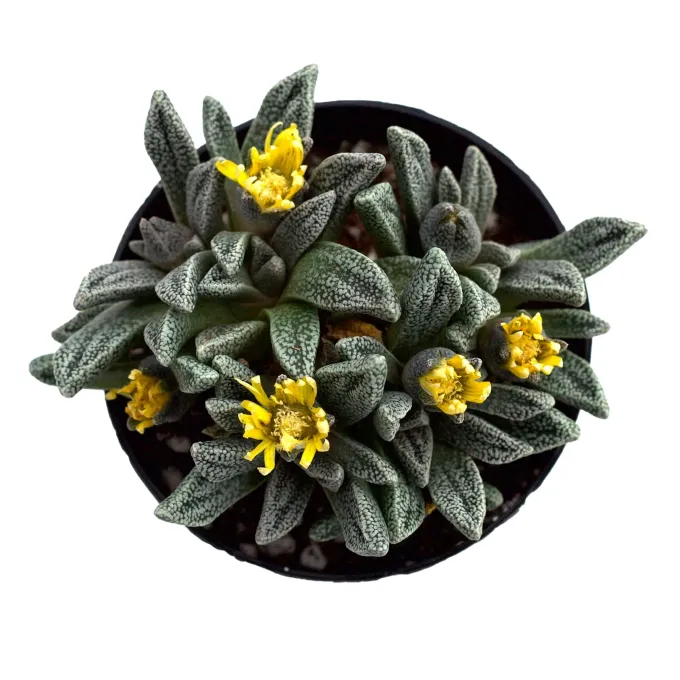
The morphology of the plant includes compact rosettes of fleshy leaves characterized by distinctive white tuberculate bumps on the surface, which resemble pearls. This structural adaptation helps the plant manage intense heat and minimize water loss through transpiration.
Successful cultivation requires a highly porous, gritty substrate that ensures rapid drainage. A standard succulent mix should be supplemented with extra inorganic materials such as pumice or coarse sand to prevent the roots from remaining saturated with water.
This species demands full sun exposure to maintain its compact growth habit and natural coloration. In low-light environments, Nananthus margaritifer will etiolate, losing its typical stunted, ornamental appearance and becoming more susceptible to pathogens.
Climatic requirements necessitate a clear distinction between the growing season, which benefits from warm days, and the winter dormancy period. During dormancy, the plant must be kept in a cool and strictly dry state to simulate its natural habitat and promote blooming.
Main diseases and pests
The primary threats to this culture are fungal pathogens, specifically those causing root rot, which are triggered by overwatering or poor ventilation. Ensuring excellent air circulation and allowing the substrate to dry completely between waterings are essential preventive measures.
Regarding pest pressure, mealybugs and root-mealybugs pose the most significant risk to the health of the plant. Regular monitoring of the foliage and root zone, combined with systemic insecticide treatments, is recommended to mitigate the infestation of these insects.