
Myriopus volubilis
Myriopus volubilis
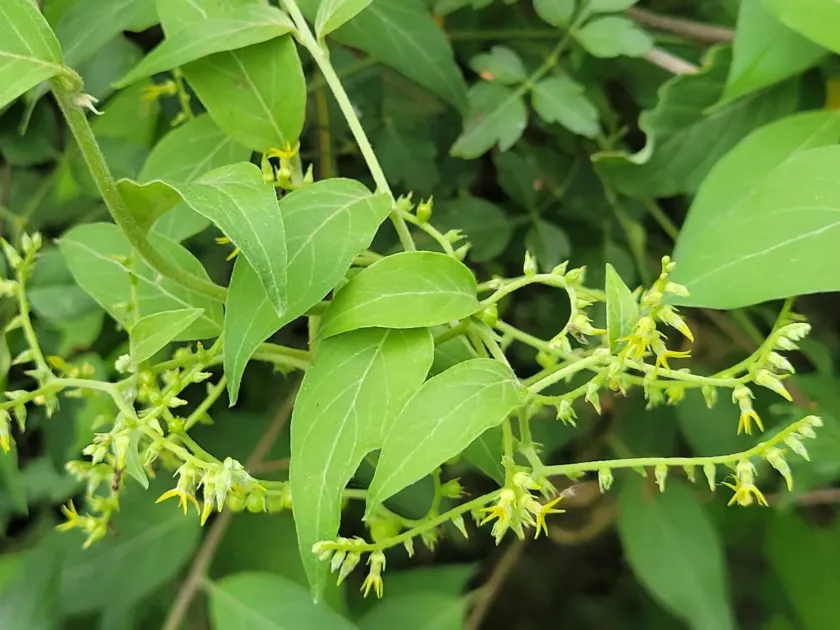
Description
Growing requirements
Myriopus volubilis, commonly known as a climbing vine, belongs to the Boraginaceae family. This woody vine is native to tropical regions of the Americas and thrives in humid environments.
Cultivating this species requires a warm climate with temperatures consistently ranging between 22 and 28 degrees Celsius. The plant is highly sensitive to cold and frost, necessitating greenhouse conditions in temperate zones.
The soil must be well-draining, rich in organic matter, and slightly acidic. A porous structure is essential to prevent root asphyxiation, which can occur if the substrate becomes waterlogged.
Adequate light is necessary for robust development, although young plants may benefit from partial shade to avoid direct sunlight scorching. Proper spacing is required to ensure good airflow between climbing vines.
Training the plant onto vertical supports is a fundamental part of its agrotechnology. Regular pruning helps to maintain the shape of the plant and stimulates the growth of new productive shoots.
Harvesting
The harvest of Myriopus volubilis focuses on obtaining biomass for medicinal or experimental purposes. The timing of the harvest is critical and should coincide with the peak of the plant's vegetative growth.
Technicians use sharp, sterilized shears to harvest the aerial parts of the vine. Careful handling ensures that the structural integrity of the main stems is preserved for subsequent growth cycles.
After collection, the material is transported to a processing facility for immediate drying. Ensuring low humidity during the drying phase is essential to maintain the concentration of phytochemicals.
Post-harvest handling involves sorting and cleaning the leaves and stems to remove any debris or contaminants that may have gathered during the growing process.
Proper storage is the final step, involving moisture-proof containers in a cool, dry area to ensure long-term stability and quality of the harvested botanical material.