
Murdannia triquetra
Murdannia triquetra
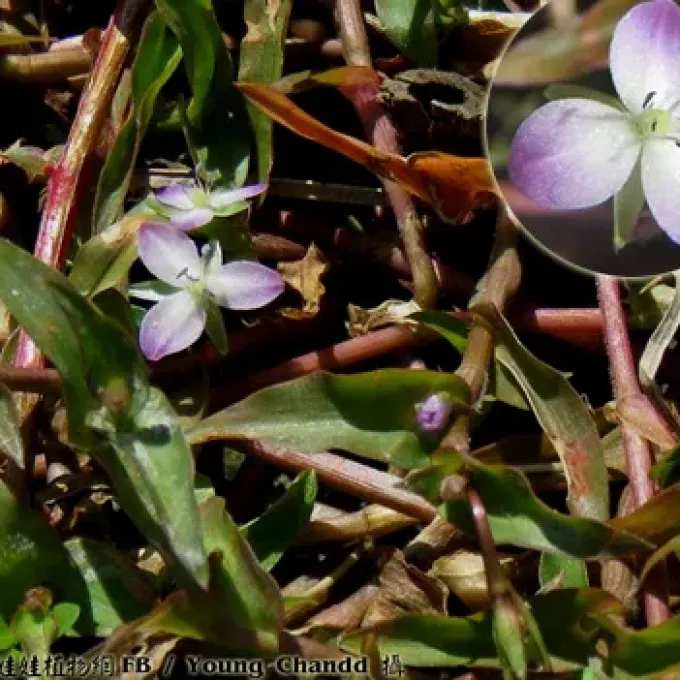
Description
Growing requirements
Murdannia triquetra is an annual herbaceous plant belonging to the Commelinaceae family. Naturally found in tropical and subtropical regions, it thrives in moist and shaded environments where it can easily spread through vegetative growth.
The plant features creeping stems that root easily at the nodes when in contact with moist soil. Its leaves are typically linear to lanceolate in shape, and it produces delicate, small flowers that often range in color from pink to light blue or white.
To cultivate this plant successfully, high temperatures and constant humidity are essential. The ideal temperature range for active development is between 22 and 30 degrees Celsius, as the plant is highly susceptible to cold damage and cannot survive frost.
Soil requirements focus on fertility and water retention. The plant performs best in loamy or sandy soil enriched with organic matter, maintaining a neutral to slightly acidic pH level for optimal nutrient uptake.
The primary agricultural and economic use of Murdannia triquetra lies in its application in traditional medicine. It is harvested for its phytochemical properties, which are studied for potential anti-inflammatory and antioxidant health benefits.
Main diseases and pests
Major threats to the crop include fungal infections such as root rot and powdery mildew, which thrive in stagnant, poorly ventilated conditions. Maintaining airflow is critical to crop health.
Common pests include spider mites and aphids, which frequently infest the tender foliage. Integrated pest management, including regular scouting and organic-based control, is recommended to preserve plant quality.