
Murdannia keisak
Murdannia keisak
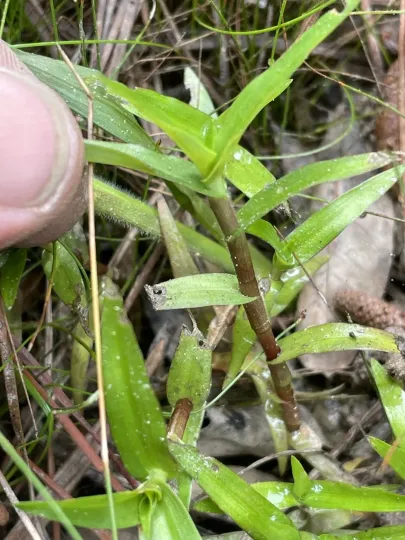
Description
Sowing dates
Murdannia keisak, commonly known as marsh dayflower, belongs to the Commelinaceae family and is recognized as a hardy perennial aquatic herb.
Propagation primarily occurs through seeds that germinate in flooded environments during the late spring as water temperatures rise consistently.
The plant demonstrates a remarkable capacity for vegetative reproduction; stem nodes easily develop roots when they come into contact with wet soil or sediment.
In agricultural settings, sowing is rarely intentional, as the plant often invades rice paddies via contaminated water sources and irrigation channels.
For research or ornamental purposes, planting involves placing seeds in a water-saturated substrate where they can establish a robust root system quickly.
Growing requirements
This species requires high moisture levels and thrives best in wetland habitats, flooded fields, and alongside slow-moving water bodies.
It prefers warm climates where temperatures remain between 20°C and 30°C, as the plant is highly susceptible to frost and freezing temperatures.
Soil composition should be rich in organic matter, providing sufficient nutrients to support its rapid growth and extensive horizontal spread.
The plant exhibits high light requirements for flowering, although it remains competitive even in environments with intermittent shading.
Effective growth is strictly linked to constant water availability; it is an obligate wetland species that cannot survive prolonged periods of desiccation.
Main diseases and pests
The plant is notoriously resilient, showing significant resistance to common botanical diseases that might otherwise curtail its population spread.
In rice production, the main threat is its ability to outcompete crops for nitrogen and other essential soil nutrients, leading to yield reductions.
Pest management is challenging because the plant can regenerate from small stem fragments left in the soil after mechanical weeding attempts.
Systemic herbicides are the most common method of control, though timing is critical to ensure efficacy without damaging the surrounding environment.
Due to its invasive nature in many parts of the world, agricultural authorities often monitor its presence to prevent the infestation of irrigation infrastructure.
Harvesting
Harvesting is typically conducted as a weed management practice rather than for commercial production, focusing on the removal of the entire plant body.
Manual removal is labor-intensive and requires careful extraction of the root zone to prevent dormant nodes from sprouting again.
Mechanical harvesting must be performed with caution, as scattering stem fragments can inadvertently expand the infested area within the field.
When used for experimental or biological purposes, harvesting should occur before the seed-set phase to minimize the risk of spreading the population.
Post-harvest management requires that all biomass be removed from the site and disposed of through composting or incineration to ensure total eradication.