
Morisonia hastata
Morisonia hastata
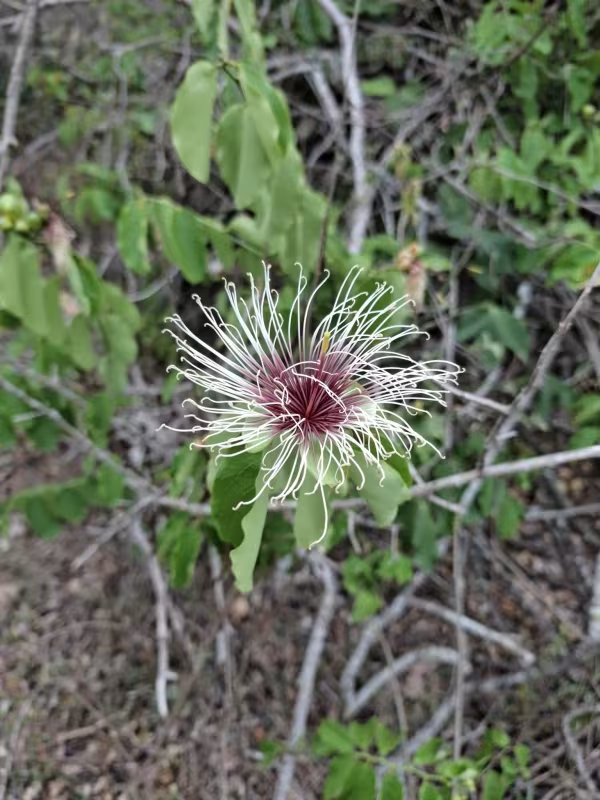
Description
Sowing dates
Morisonia hastata requires careful attention during the sowing process, as it is a warmth-loving crop. Seeds should be sown in well-warmed soil only after the risk of frost has passed, typically in late spring when ground temperatures exceed 18 degrees Celsius.
Pre-soaking seeds in growth stimulants is highly recommended to improve germination rates. For growers in temperate zones, starting the plants in greenhouses or indoors about two months before the final planting date is essential for a successful season.
Seeds should be planted at a depth of 2–3 centimeters in well-drained, nutrient-rich soil. Keeping the seedbed consistently moist but not waterlogged is critical during the initial two-to-three-week germination window.
Once seedlings are established, spacing is a vital factor for long-term health. A planting distance of 60 to 80 centimeters between individual plants is ideal to ensure adequate airflow and prevent overcrowding.
Consistent monitoring during the early stages of development ensures that the plants are not outcompeted by weeds. Early weeding is necessary to prevent nutrient depletion in the soil surrounding the root zone.
##requirements##This crop belongs to the Capparaceae family and is native to tropical environments. It is well-adapted to regions with seasonal moisture changes, thriving under conditions that provide both warmth and significant sunlight.
Sunlight exposure is a primary requirement for Morisonia hastata. The plant thrives in full sun, and any shade will likely reduce the development of foliage and overall plant vigor throughout the growing season.
Soil requirements focus on neutrality or slight alkalinity with excellent drainage properties. Soils that retain too much moisture, such as heavy clay, should be amended with organic matter or sand to improve root development.
Temperature plays a crucial role in plant metabolism. The ideal growth range is between 22 and 30 degrees Celsius. Sudden temperature drops or cold snaps can significantly hinder growth and increase plant susceptibility to disease.
- High solar radiation is necessary for optimal performance.
- Protection from strong winds is required to prevent mechanical damage.
- Moderate irrigation is essential, avoiding water accumulation around the base.
- Mulching is recommended to maintain soil moisture consistency.
Yield
The yield of Morisonia hastata is largely determined by the intensity of management and the adoption of modern agricultural practices. When provided with optimal conditions, the plant can produce significant biomass.
Effective vegetative growth relies on balanced nutrition, particularly nitrogen and potassium application. Monitoring the soil nutrient levels during the active growth phase is recommended to adjust fertilization programs accordingly.
Harvesting strategies can influence total productivity. Selective harvesting encourages the development of new shoots and side branching, which can extend the period of active production throughout the summer.
Irrigation efficiency, preferably through drip systems, minimizes water waste and ensures consistent delivery of water directly to the root zone. This is a proven method to increase harvest volume in drier climates.
Future research into different cultivars may unlock higher yield potentials. Currently, growers should focus on maintaining plant health through proper spacing and regular observation to maximize the output of every plant.
Main diseases and pests
The primary threats to this crop are fungal diseases caused by excess humidity and poor air circulation. Effective prevention includes regular thinning of leaves and ensuring the planting site is properly aerated.
Pests such as spider mites and aphids are common concerns, especially in hot and dry weather. These insects can quickly colonize the plant, leading to leaf yellowing and structural damage if not managed early.
Biological control agents, such as predatory insects, are often preferred for managing pest populations in Morisonia hastata. If chemical interventions are necessary, they should be applied with caution to protect beneficial organisms.
Bacterial spot diseases can spread rapidly in high-humidity conditions. Maintaining clean tools, particularly shears and knives used for pruning, is an essential hygiene measure to prevent the transmission of infections.
Proactive monitoring for signs of stress, such as wilting or discoloration, allows for early intervention. Swift removal of infected plant tissue is necessary to limit the spread of diseases across the plantation.
Harvesting
Harvesting Morisonia hastata should be performed with precision. The optimal time to collect the crop is when the plant parts have reached technical maturity, usually indicated by changes in aroma and coloration.
Manual collection using clean, sharp tools is the standard practice. This prevents unnecessary tearing of the plant tissue and ensures that the harvest remains in high-quality condition for transport and processing.
Post-harvest management is critical. The gathered material must be moved to a clean, shaded area immediately to prevent degradation from sun exposure, which can evaporate volatile components and reduce quality.
Drying the material in a temperature-controlled environment, below 40 degrees Celsius, preserves the chemical integrity of the plant. Proper airflow in the drying facility prevents the development of mold.
Packaging the dried product in airtight containers ensures stability during storage. Maintaining these standards guarantees that the final output meets market requirements and retains its biological efficacy.