
Purple moor grass
Molinia caerulea (L.) Moench
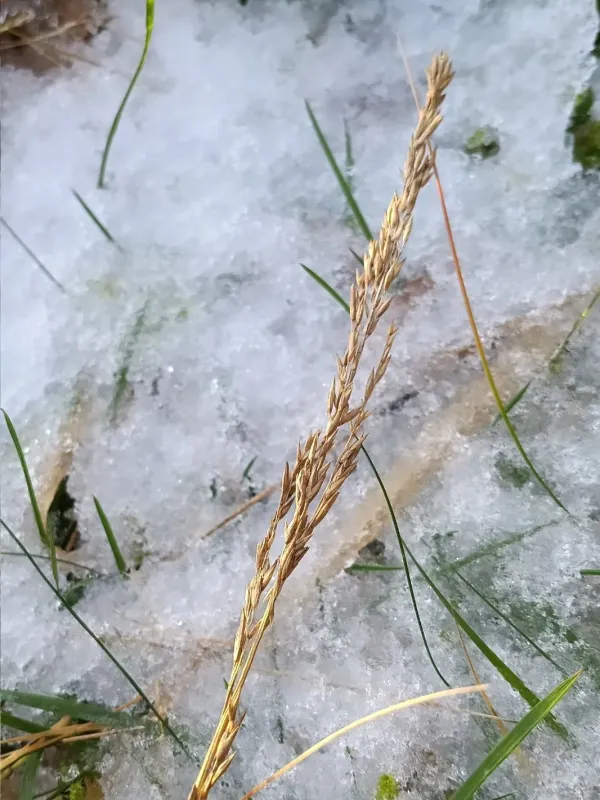
Description
Sowing dates
Purple moor grass (Molinia caerulea) belongs to the Poaceae family. For professional cultivation, seeds are sown in late autumn or early spring after a necessary stratification period of 1–2 months to ensure uniform germination.
The optimal sowing time is in April when soil temperatures reach +10–12 degrees Celsius. Seeds should be sown on the soil surface, as they require light to germinate, or covered with a very thin layer of substrate.
Seedlings emerge slowly and require constant soil moisture during the initial development phase. In the first year, growth is focused on root establishment, making weed control essential for successful stand formation.
Vegetative propagation is performed by division of established clumps in early spring. This method ensures uniform plants and significantly faster development of high-quality biomass compared to seed-grown specimens.
Planting density is determined by the intended use: higher densities are used for biomass production, while landscape designs require spacing of 40–60 centimeters between individual plants.
Growing requirements
This species thrives in temperate climates and is highly tolerant of cold winters. Its native range extends across much of Eurasia, where it is found in diverse habitats from acidic moors to open woodlands.
Molinia caerulea has specific soil requirements, preferring acidic or slightly acidic substrates with a pH ranging from 4.5 to 6.0. It does not tolerate alkaline or highly limed soils, which may lead to plant decline.
The plant is moisture-loving and performs best in damp or boggy conditions. However, it can adapt to moderately dry environments if regular irrigation is provided during the critical growth phases in late spring.
Full sun is essential for optimal growth and flowering. While it can survive in partial shade, prolonged lack of sunlight results in weak, spindly stems that tend to lodge under moderate wind pressure.
Proper maintenance includes protecting young plants from drought, while mature plants develop deep root systems that provide excellent resistance to varying environmental conditions.
Yield
As a perennial forage grass, Molinia can be harvested from natural meadows and pastures. It is palatable to livestock in its early vegetative state before the stems become overly fibrous and lignified.
Biological productivity peaks in the third year after planting. Yield potential is heavily dependent on soil organic matter content and consistent moisture availability throughout the growing season.
In ornamental horticulture, yield refers to the number and quality of flower spikes. Appropriate care, including annual pruning and fertilization, encourages vigorous clumps that produce numerous decorative plumes.
The dry biomass has potential industrial uses, including the production of biofuels or mulch for agricultural purposes, thanks to the durability and structural integrity of the dried stems.
A productive stand can remain viable for 10–15 years. Periodic rejuvenation through division or management of the stand is recommended to maintain optimal yield and plant health over time.
Main diseases and pests
Purple moor grass is remarkably resistant to most common grass pathogens, including rusts and powdery mildew. Its robust nature makes it a reliable choice for low-input agricultural or landscape systems.
The main risk involves excessive water stagnation combined with poor airflow, which may lead to root or crown rot. Good drainage is the most effective preventative measure against such issues.
Pest pressure is generally low. Aphids may occasionally infest plants during hot, dry spells, but they rarely cause significant damage and can be managed with standard biological control methods.
Soil-dwelling pests are rarely an issue, as the root chemistry of the plant acts as a natural deterrent. This resistance simplifies crop management and reduces the need for chemical inputs.
Maintaining proper spacing between plants is crucial to prevent overheating and the development of fungal pathogens during periods of high humidity.
Harvesting
For forage purposes, the harvest should take place before the flowering stage. At this point, the leaves have the highest nutritional value and protein content, making them most suitable for livestock.
In landscape management, the foliage is left intact throughout the winter. The dried stems provide vital protection for the plant's crown, insulating it against freezing temperatures and harsh winds.
Pruning must be performed in early spring, just before the new growth begins. The old biomass is cut back close to the ground to allow light and air to reach the new shoots.
For seed production, harvest the flower plumes once they have turned a deep straw color. The process requires care because the tiny seeds are prone to shedding once they are fully mature and dry.
After collection, seeds should be dried in a well-ventilated area away from direct sunlight and cleaned to remove debris, ensuring they are ready for storage or immediate future use.