
Monarda didyma
Monarda didyma x M. fistulosa
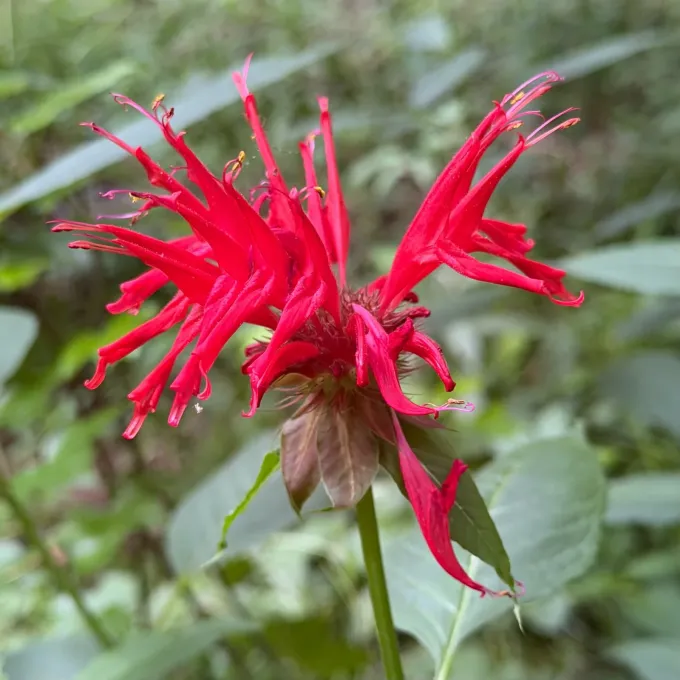
Description
Sowing dates
Monarda didyma, belonging to the Lamiaceae family, is a herbaceous perennial that can be propagated through seeds, cuttings, or root division.
Seed sowing is typically conducted in early spring under controlled indoor conditions, with seedlings transplanted to the field after the frost risk passes.
For large-scale cultivation, vegetative propagation by dividing established clumps every three years is preferred to ensure consistency in oil production.
The spacing between plants should be approximately 40 to 60 centimeters to allow adequate light penetration and prevent moisture accumulation.
Seeds require minimal soil covering due to their small size, so they are typically pressed into the substrate rather than buried deeply.
Growing requirements
Monarda thrives in fertile, moist, and well-drained soils, ideally with a pH range of 6.0 to 7.0 for optimal nutrient uptake.
While the crop performs best in full sun, it shows good adaptability to light shade, particularly in regions with intense summer heat.
Consistent irrigation is vital, as the shallow root system is highly susceptible to drought stress, which can halt growth and oil production.
Balanced fertilization with organic matter or NPK formulations is recommended during the early growth stages to maximize biomass yield.
Mulching is a key agricultural practice to maintain soil moisture levels and suppress weeds, which compete for nutrients in the early season.
Yield
The primary agricultural output is the essential oil, specifically thymol, which is harvested for pharmaceutical and cosmetic industrial use.
Biomass production can reach high levels when managed with optimized irrigation and fertilization, making it a viable crop for herbal enterprises.
Monarda is also highly prized as a honey plant, contributing to secondary income streams through apiculture during its prolific flowering period.
Dried leaves and flowers are sold in the culinary market as ingredients for aromatic herbal teas and as decorative additions to floral arrangements.
Strategic management of crop rotation helps maintain soil health, ensuring consistent yields over the lifespan of the plantation.
Main diseases and pests
Powdery mildew is the most significant disease affecting Monarda didyma, often triggered by stagnant air and high ambient humidity levels.
Root rot, caused by poor drainage or overwatering, poses a risk to plant density and overall plantation longevity if not addressed timely.
Insects like spider mites and aphids can cause considerable leaf damage, negatively impacting the photosynthetic efficiency and essential oil quality.
Integrated Pest Management (IPM) practices, including proper sanitation and removal of infected debris, are essential for disease mitigation.
Choosing resistant cultivars is a foundational strategy for minimizing the need for chemical interventions in commercial monarda farming.
Harvesting
Harvesting should occur when the plants are in full bloom, which is the stage where secondary metabolites and oil glands are most active.
Using mechanical harvesters, the plants are cut roughly 20-30 centimeters above the ground to encourage healthy regrowth for a second cut.
Rapid processing is required after harvest to prevent the essential oils from oxidizing or volatile compounds from escaping during the drying process.
Drying must occur in a temperature-controlled environment to preserve the chemical profile and the intense aroma characteristic of the species.
The final product is usually processed into dried herb bundles or steam-distilled to extract high-purity oils for commercial export.