
Hybrids of Monarda didyma and Monarda bradburiana
Hybrids between Monarda didyma and Monarda bradburiana
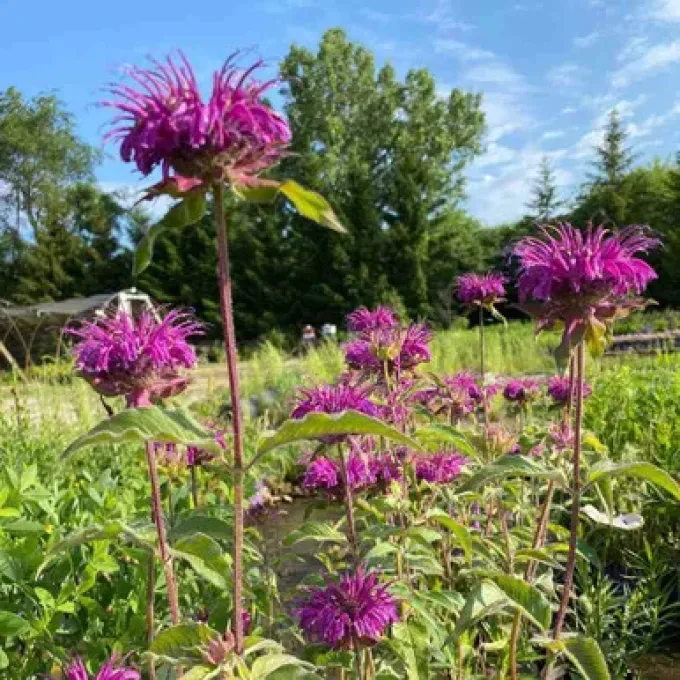
Description
Sowing dates
Propagation of these Monarda hybrids is typically carried out via seedlings to ensure consistent crop establishment. Seeds should be started indoors in late winter or early spring using a well-draining, nutrient-rich potting medium.
Direct seeding in the field can be attempted in autumn as the seeds often require a period of cold stratification to break dormancy. Spring sowing is also possible provided the seeds have been cold-treated or the soil is sufficiently cool.
Germination generally occurs within two to three weeks under optimal moisture conditions. Seedlings require bright, indirect light to develop strong stems and prevent etiolation during the early growth stages.
Transplanting into individual containers or plug trays should occur after the first true leaves have emerged. This step fosters a robust root system, which is essential for successful field establishment in late spring.
Planting out into the final garden or production site is best performed once the risk of frost has passed. Spacing should be approximately 45 centimeters apart to allow for proper airflow, reducing the risk of fungal outbreaks.
Growing requirements
Belonging to the Lamiaceae family, these hybrids thrive in full sun to partial shade. Exposure to sunlight is critical for maximizing essential oil content, which is a primary reason for cultivating these plants.
The ideal soil is moisture-retentive, fertile, and slightly acidic to neutral in pH. Because Monarda species are susceptible to root issues, ensuring the planting site has excellent drainage is a mandatory practice.
Fertility management involves incorporating organic matter such as mature compost prior to planting. Supplemental feeding during the early spring vegetative growth phase supports rapid foliage expansion.
Consistent irrigation is vital, especially during prolonged dry spells. Plants that experience drought stress during the mid-summer flowering window show reduced vigor and lower volatile oil yields.
These hybrids are generally cold-hardy, inheriting traits from their North American native ancestors. They adapt well to various temperate zones but require protection from extreme winter desiccation through mulching.
Main diseases and pests
Powdery mildew represents the most significant phytopathological challenge for these Monarda hybrids. High humidity and stagnant air are the primary catalysts for infection, creating white patches on the leaf surface.
Mitigation strategies include selecting resistant cultivars, maintaining proper plant spacing for ventilation, and ensuring that overhead irrigation is minimized to keep foliage dry during the day.
Aphids are the most common insect pests, typically clustering on succulent new growth and flower buds. Infestations lead to stunted growth and, if uncontrolled, the transmission of viral diseases among the crop.
Spider mites may become problematic during hot, arid summer months. These pests feed on cell sap, causing fine stippling on the leaves, which can eventually lead to leaf drop and decreased photosynthetic capacity.
Maintaining a clean cultivation area by removing host weeds is essential for pest management. Rotation of crops and sanitation of the planting site after harvest significantly lowers the overwintering pest population.