
Mitrophyllum clivorum
Mitrophyllum clivorum
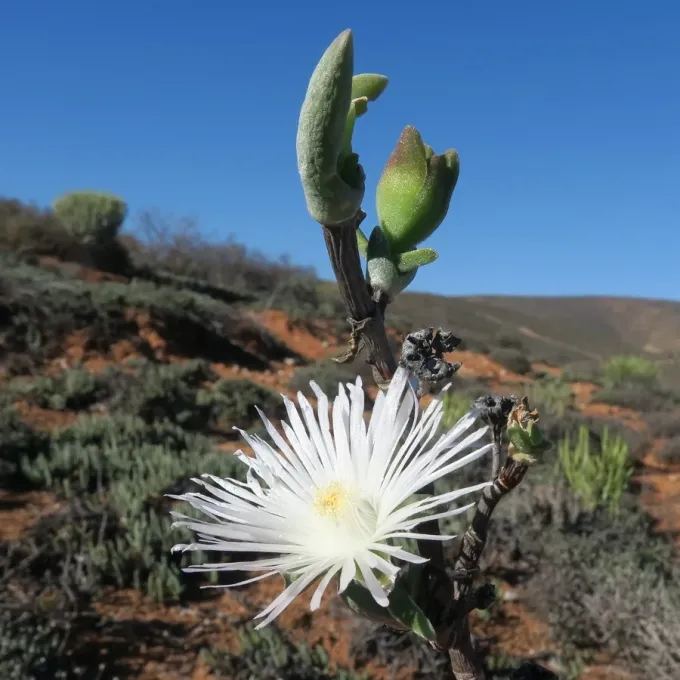
Description
Growing requirements
Mitrophyllum clivorum is a distinct succulent species belonging to the Aizoaceae family. It is recognized for its specialized morphology that allows the plant to thrive in the arid environments of Southern Africa.
The native distribution area is primarily focused in the Cape region, where the plant has adapted to survive extreme temperature fluctuations and significant water scarcity throughout the year.
Its botanical structure includes a fascinating dimorphic leaf development. The plant exhibits two distinct forms of growth, where succulent leaves are protected by specialized sheaths during the dormant, dry season.
Cultivation requirements demand a highly porous, gritty substrate that ensures rapid water drainage. A mix consisting mainly of inorganic elements like pumice, lava rock, and coarse sand is highly recommended.
Regarding climate, the plant requires intense sunlight to maintain its natural growth habit. Proper air circulation is essential, especially during the active growing season to prevent overheating and moisture buildup.
Main diseases and pests
The most significant threat to Mitrophyllum clivorum is excessive soil moisture. Overwatering quickly causes root rot and bacterial infections that can destroy the plant from the inside out.
Mealybugs are the most common pests, often settling deep within the plant's structural crevices where they are difficult to detect until an infestation becomes severe.
Spider mites can also become a problem if the ambient humidity is extremely low and the environment is too warm, leading to unsightly scarring on the plant's surface.
Management practices focus on preventive measures. Maintaining strict watering schedules and ensuring good drainage are the primary ways to keep the plant healthy and free from fungal issues.
If chemical control is necessary, one must use mild insecticides and avoid spraying during the peak of the dormant season to prevent damaging the fragile leaf tissues of the succulent.