
Mitrasacme pygmaea
Mitrasacme pygmaea
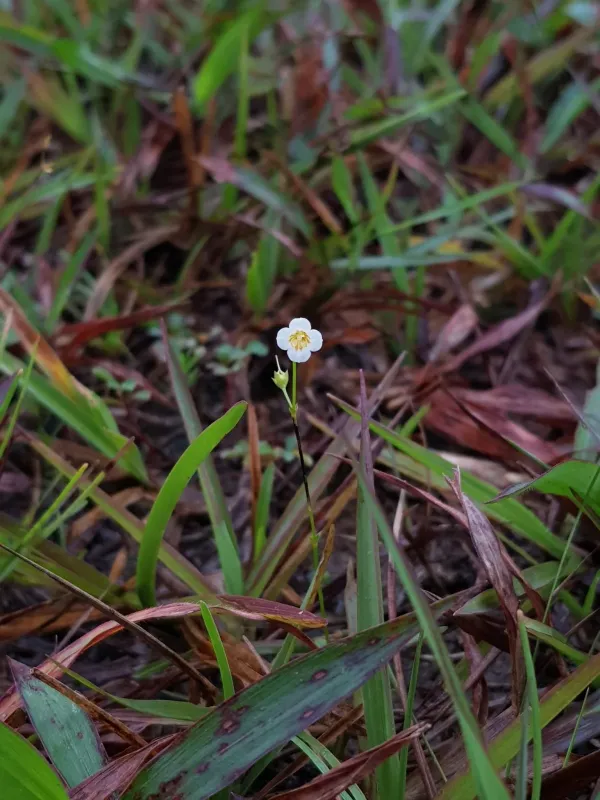
Description
Growing requirements
Mitrasacme pygmaea is a small herbaceous species belonging to the Loganiaceae family. The plant is botanically noted for its delicate structure and specific adaptation to environments where moisture is consistently available, typically forming small, dense clusters.
The native distribution of this species spans across East and Southeast Asia, including parts of Japan and the Philippines. It naturally populates wetland areas, marshes, and the periphery of freshwater bodies, where it benefits from high soil organic content.
Regarding environmental conditions, the plant requires consistent moisture levels to sustain its growth cycle. Drought resistance is minimal, and the plant often undergoes significant stress if the substrate is allowed to dry out completely between irrigation cycles.
The ideal soil profile for Mitrasacme pygmaea should be rich in organic matter and possess a slightly acidic to neutral pH level. Proper drainage is essential to prevent root rot, yet it must be balanced with the plant's high water retention needs for its root system.
In terms of climate, it thrives in warm, humid conditions typical of subtropical zones. Protection from direct, harsh solar radiation is recommended to prevent leaf tissue damage, making it a plant that performs best under diffused or indirect light sources.