
Miscanthus floridulus
Miscanthus floridulus (Labill.) Warb. ex K. Schum. & Lauterb.
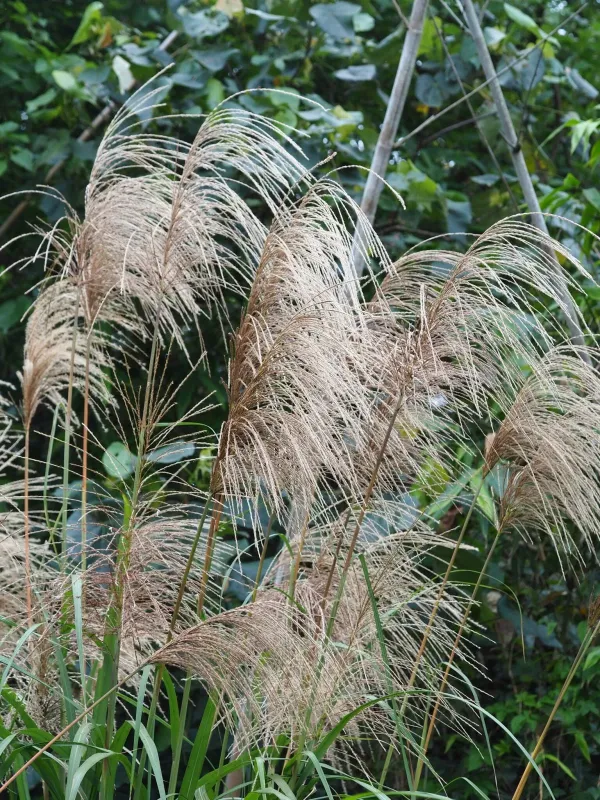
Description
Growing requirements
Miscanthus floridulus is a perennial herbaceous plant belonging to the Poaceae family. Known as flowering miscanthus, it is a robust, tall-growing grass that forms dense clumps and exhibits vigorous growth in favorable tropical and subtropical climates.
The plant originates from East Asia and the Pacific Islands, where it thrives in humid environments. Its cultivation range has expanded globally, driven by the increasing demand for sustainable and high-yielding biomass resources in the agricultural sector.
The crop requires fertile, well-drained soils and thrives in locations with high sunlight exposure and consistent moisture levels. While it shows some adaptability, the plant's growth potential is significantly enhanced when irrigation is provided during early development stages.
Botanically, it is characterized by broad leaves and large panicles. The extensive root system helps the plant establish firmly in the soil, allowing it to regenerate year after year and effectively sequester nutrients from the ground.
Hostile climatic conditions, such as extreme frost, can hinder growth, making site selection crucial for commercial success. Its primary economic value lies in its high cellulose content, which makes it ideal for biofuel production and industrial raw material processing.
Main diseases and pests
Miscanthus floridulus is generally hardy and displays significant resistance to many common cereal diseases. However, in poorly drained or waterlogged soils, the plants may become susceptible to fungal infections that target the rhizome system.
Pest pressure is typically low, although localized infestations by insects feeding on succulent new shoots can occur. Integrated pest management, focusing on field hygiene and healthy crop rotation practices, is usually sufficient to maintain high yields.
Harvesting
Harvesting of the biomass is performed once the plant reaches physiological maturity and the moisture content drops significantly. The ideal window for harvest usually begins in late autumn, extending into the winter months after the first frosts.
Harvesting operations involve mechanical mowing and chopping of the dry stalks to produce chips. Efficient logistics and storage are essential to maintain the quality of the biomass before it is transported to processing facilities for energy production.