
Miscanthus lutarioriparius
Miscanthus lutarioriparius L. Liou ex Renvoize & S. L. Chen
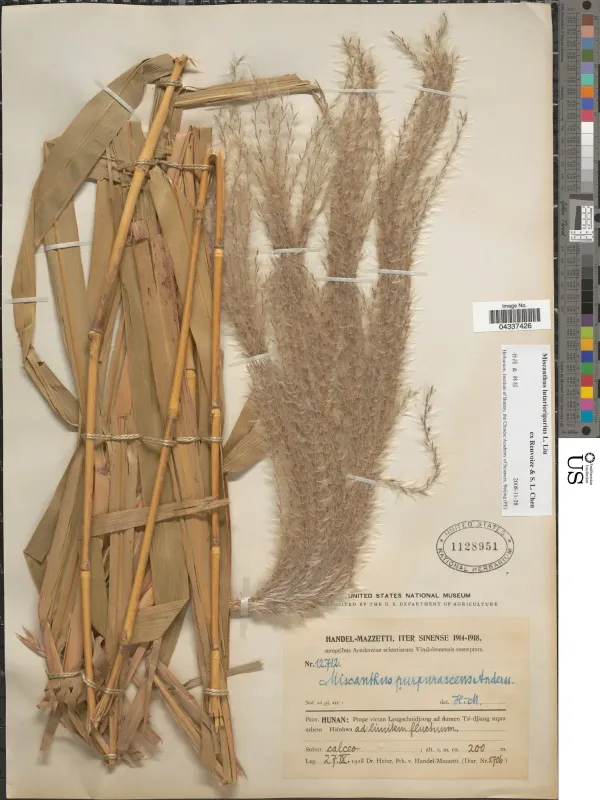
Description
Sowing dates
Miscanthus lutarioriparius is a perennial rhizomatous grass that is primarily propagated vegetatively rather than by seed. Due to the low viability of seeds in field conditions, the use of rhizome cuttings is the standard industry method for establishing new plantations.
The ideal planting time occurs in early spring, once the soil has warmed up to at least 10–12 degrees Celsius. Timely planting is crucial to allow the plants to develop sufficient root mass before the heat of summer sets in, ensuring higher survival rates.
Planting depth typically ranges from 10 to 15 centimeters, which protects the rhizomes from temperature fluctuations and prevents desiccation. Mechanical planters designed for energetic crops are commonly used to ensure correct depth and spacing across large areas.
Planting density is determined by the specific end-use objectives, usually ranging from 10,000 to 20,000 rhizomes per hectare. Higher densities help establish a closed canopy quickly, which suppresses weed growth and reduces the need for manual or chemical maintenance.
Post-planting management involves soil compaction to ensure the rhizomes maintain firm contact with the substrate. Once established, the plantation is highly resilient and can remain productive for over two decades without the need for periodic replanting.
Growing requirements
As a member of the Poaceae family, this species is well-adapted to environments with sufficient soil moisture, often thriving in river floodplains. It is known for its C4 photosynthetic pathway, which allows it to thrive in high-temperature environments with intense light exposure.
The crop prefers fertile, well-drained loamy or sandy-loam soils. While it exhibits great ecological plasticity, it does not tolerate permanent waterlogging that could lead to rhizome rot, although it does require consistently available moisture throughout the growing season.
Optimal growth depends on a long growing season without frosts. While it possesses moderate cold tolerance, young plantations may require protection during their first year if exposed to severe, snowless winters that could lead to deep soil freezing.
Nutrient requirements are moderate, but consistent nitrogen application during the early vegetative phase significantly boosts biomass production. Over the years, the plant recycles a portion of its nutrients back into the soil through leaf litter, contributing to long-term soil health.
Open fields with full sun exposure are essential for achieving the highest yields. The crop should be kept clear of overshadowing vegetation, as reduced light levels significantly hinder its ability to accumulate lignocellulose and total biomass.
Yield
Miscanthus lutarioriparius is recognized as one of the most productive perennial energy crops worldwide. Under optimal conditions, annual dry matter yields can range from 20 to 30 tons per hectare, making it a highly attractive source for sustainable energy production.
The establishment phase is gradual, with biomass yields increasing year over year until the plantation reaches its peak maturity around the fourth season. Once mature, the yields remain stable for many years, providing a reliable source of raw material.
Yield efficiency is directly correlated with environmental conditions, including rainfall and sunlight duration. Strategic irrigation in drier climates can significantly enhance total output, ensuring the plantation meets its full genetic potential for biomass accumulation.
The harvested biomass possesses high calorific value, comparable to softwood species, making it excellent for direct combustion in industrial boilers or for conversion into biofuels. Its chemical composition also makes it a valuable feedstock for the paper and pulp industry.
The high carbon sequestration potential of this crop makes it an important asset for climate-smart agriculture. By maintaining the soil undisturbed for long periods, it helps build organic matter and improves the overall physical properties of the farmland.
Main diseases and pests
This species is characterized by remarkable resistance to most common agricultural pests and diseases. This natural robustness reduces the reliance on chemical pesticides, positioning it as an environmentally sustainable choice for industrial farming.
While the crop is generally hardy, soil-dwelling insects such as wireworms may occasionally damage rhizomes during the initial establishment phase. However, once the root system is robust, the plants become largely impervious to most insect damage.
Fungal leaf diseases might appear in areas with poor air circulation or excessively high humidity. These issues are typically minor and do not require intensive treatment, especially when healthy planting stock and proper spacing are maintained from the start.
The lack of significant viral diseases allows farmers to keep plantations in production for up to 20 years without risk of decline. This biological stability is one of the key factors that makes the crop economically viable for long-term investments.
Good management practices, such as ensuring proper field drainage and regular scouting, are sufficient to handle any potential phytosanitary threats. The crop’s high defensive capability contributes to its longevity and reliability in diverse climates.
Harvesting
Harvesting takes place during the winter dormancy period, typically between February and April. At this stage, the moisture content of the stalks drops naturally to below 15–20%, eliminating the need for expensive artificial drying before processing.
Industrial harvest is usually performed using forage harvesters equipped with shredders, which process the stalks into uniform chips in a single pass. This streamlined workflow reduces labor and machinery costs significantly for large-scale operations.
Maintaining a stubble height of at least 15 centimeters is a critical requirement for successful overwintering. Cutting too low can expose the dormant buds to freezing temperatures, which could jeopardize the regrowth potential for the following season.
Field logistics are managed to minimize soil compaction, often utilizing lighter harvesting equipment or conducting operations when the ground is slightly frozen. This preserves soil structure and prevents damage to the subterranean rhizome network.
Once harvested, the biomass can be baled or transported directly to storage facilities. Its high bulk density and low moisture content make it easy to transport and store, ensuring a consistent supply of feedstock for energy or industrial manufacturing needs.