
Climbing hempvine
Mikania scandens (L.) Willd.
Description
Growing requirements
Climbing hempvine (Mikania scandens) is a herbaceous perennial member of the Asteraceae family. Native to North and South America, it is primarily found in wetland areas, thickets, and along forest edges where it utilizes its climbing habit to maximize light exposure.
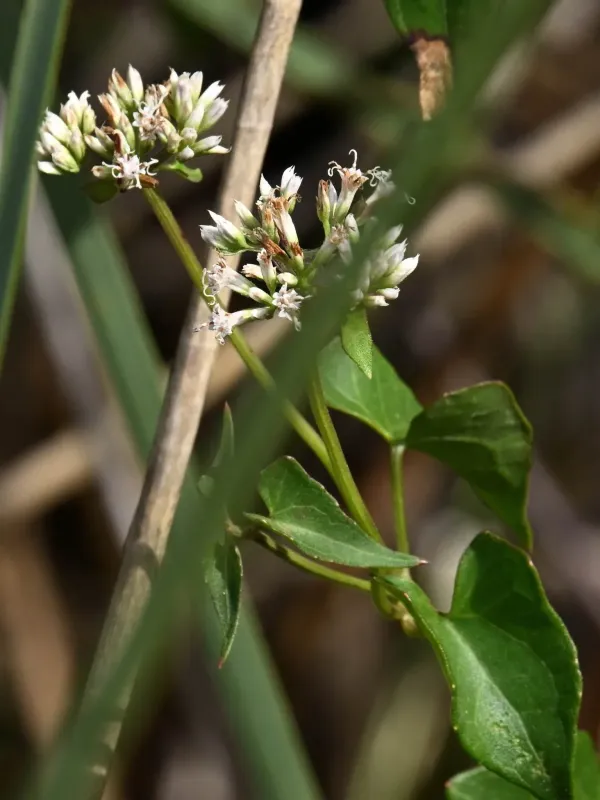
The plant is characterized by its opposite, heart-shaped leaves and slender, twining stems. These stems allow the plant to scale fences, shrubs, and other vertical supports, reaching significant lengths under optimal growing conditions.
The inflorescences consist of small flower heads grouped into larger corymbs, which are often white to pale pink in color. These blossoms provide nectar, attracting a variety of pollinators such as bees and butterflies throughout the blooming season.
Optimal growth is achieved in moist, nutrient-rich soils that provide consistent water availability. The plant thrives in partial shade, though it can tolerate full sun if the root zone remains adequately cool and moist during the heat of the day.
In terms of usage, climbing hempvine is often cultivated for its rapid growth in ornamental settings, such as covering trellises or garden screens, and has historically been explored for its medicinal properties in folk remedies.
Main diseases and pests
Common diseases affecting Mikania scandens include powdery mildew, which can significantly damage the foliage if the air circulation is poor and humidity levels remain excessively high.
Root rot is a persistent risk in waterlogged or poorly drained soils, making the selection of a suitable growing medium essential for preventing fungal infections in the root zone.
Pests such as spider mites and aphids are frequently found on the plant, particularly in sheltered environments. They can cause yellowing, leaf curling, and stunted growth, requiring regular monitoring and intervention.
Due to its aggressive growth rate, the plant can sometimes become invasive in non-native habitats, competing with local vegetation for resources and space, which necessitates controlled cultivation.
Good management practices, including pruning to improve airflow and keeping the plants free from debris, are key to preventing major disease outbreaks and maintaining the aesthetic health of the vine.