
Mikania cordata
Mikania cordata (Burm. f.) B. L. Rob.
Description
Growing requirements
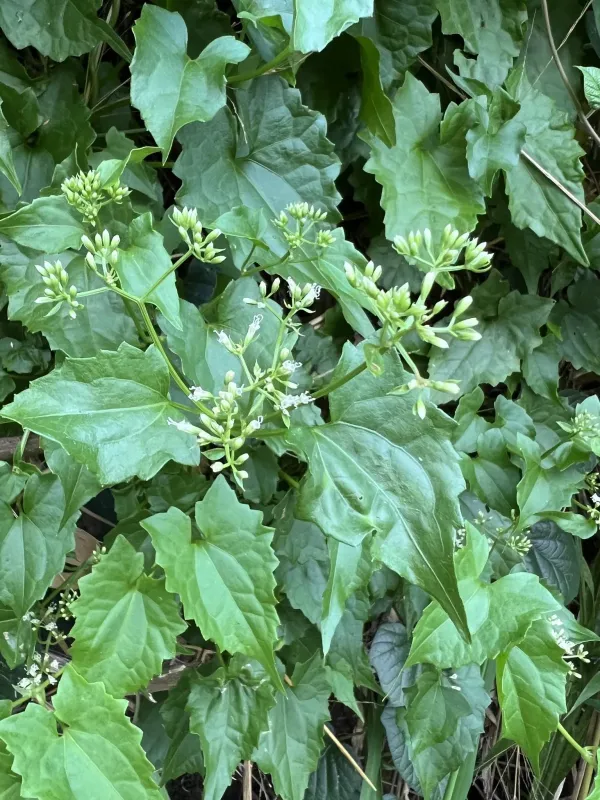
Mikania cordata is a perennial climbing vine belonging to the Asteraceae family. It is recognized by its distinct cordate leaves and vigorous, twining stems that allow it to colonize vertical structures rapidly.
The plant originates from tropical regions of Asia and exhibits a high adaptability to warm and humid climates. It typically thrives in forest fringes, riparian zones, and secondary growth areas where competition for light is intense.
Successful cultivation requires consistently high humidity and warm temperatures, as the species is highly sensitive to frost. Ideal soil conditions include fertile, well-drained loamy soils rich in organic matter to support its rapid growth cycle.
Agrotechnical management requires the installation of robust support structures to encourage healthy vertical orientation. Pruning may be necessary to manage the density of the foliage and prevent the plant from becoming overly dominant in the local micro-ecosystem.
Economically, Mikania cordata is valued in folk medicine for its pharmacological potential. It contains phytochemicals that demonstrate anti-inflammatory and antiseptic properties, often utilized in traditional treatments for dermatological issues.
Main diseases and pests
The plant is susceptible to various fungal infections, particularly rust diseases that target the leaf tissue and reduce the photosynthetic capacity of the vine.
Insect pests, including various aphids and mites, can cause significant damage by feeding on the sap of tender shoots, leading to stunted growth and leaf curling.
Viral pathogens may induce mosaic-like symptoms on the foliage, which compromises the plant's overall health and reduces its medicinal quality.
Due to its aggressive growth habit, in many agricultural landscapes, the plant is managed as a weed that requires effective containment strategies to prevent it from outcompeting cultivated crops.
Integrated pest management, focusing on biological controls and regular monitoring, is recommended to mitigate the impact of pests and diseases without compromising the plant's natural properties.