
Choisya dumosa
Choisya dumosa (Torr.) A. Gray
Description
Growing requirements
Choisya dumosa is an ornamental shrub belonging to the Rutaceae family. Native to the arid regions of the southwestern United States and northern Mexico, it is highly valued for its resilience and aromatic foliage.
The crop thrives in well-drained, sandy, or rocky soils with a neutral to slightly acidic pH. It is essential to ensure that the site provides excellent soil aeration, as stagnant water is detrimental to the plant's health and can lead to root rot.
This species prefers full sun exposure but can adapt to partial shade in hotter climates. It is well-suited for xeriscaping due to its moderate drought tolerance once the root system is established in the ground.
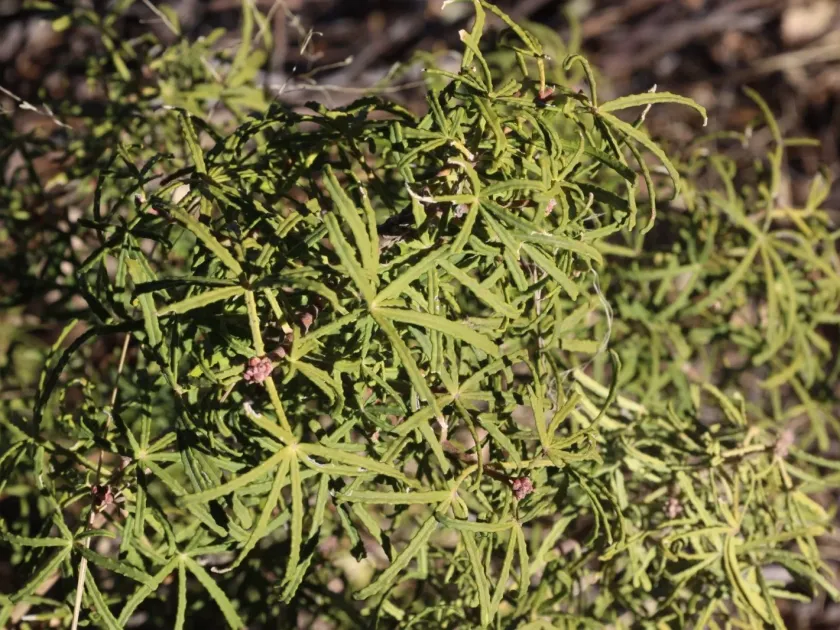
Botanically, Choisya dumosa is characterized by its narrow, often pinnate leaves that emit a distinct spicy or citrus-like fragrance when crushed. The flowers are small, white, and star-shaped, appearing in clusters during the growing season.
Agricultural and horticultural practices include light pruning after flowering to maintain a compact habit and improve structural integrity. It is often used in border plantings or as a focal point in landscapes within suitable hardiness zones.
Main diseases and pests
The primary threats to this crop include root pathogens caused by poor drainage. Excess irrigation is the most common mistake made during cultivation, leading to root asphyxiation and eventual plant death.
Pests such as scale insects and spider mites can infest the foliage, particularly under conditions of low humidity or poor plant vigor. Regular monitoring is essential to prevent significant damage to the plant structure.
In humid or stagnant environments, foliage can be susceptible to fungal leaf spots. Adequate spacing between plants ensures proper airflow, significantly reducing the probability of such infections.
Nutrient deficiencies, specifically nitrogen or iron, may occur in highly alkaline soils, manifesting as chlorosis. Soil testing and targeted fertilization can easily rectify these imbalances.
Winter injury can occur in regions with severe frosts. Protective mulching or covering the base of the plant is recommended in areas where winter temperatures drop significantly below freezing.