
Ruellia simplex
Ruellia simplex C. Wright
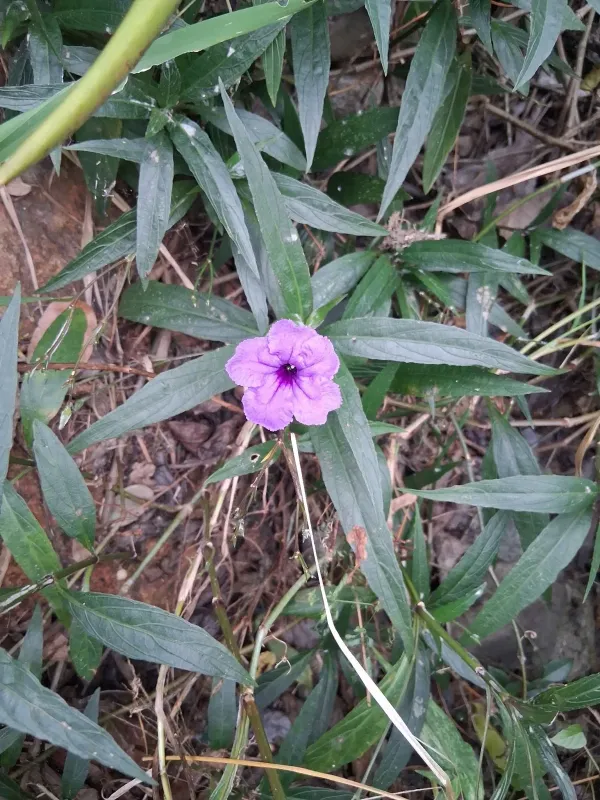
Description
Growing requirements
Ruellia simplex, commonly referred to as the Mexican petunia, belongs to the Acanthaceae family. It is a perennial herbaceous plant native to Mexico, the Caribbean, and South America, now widely distributed across tropical and subtropical regions.
The plant thrives in full sun exposure but demonstrates notable versatility by growing well in partial shade conditions. It prefers consistently moist, well-draining soils but shows remarkable tolerance for a variety of soil textures ranging from clay to sandy compositions.
Botanically, it features lance-shaped, dark green foliage and trumpet-shaped flowers. The plant typically reaches heights between 30 and 90 centimeters, forming dense clumps that are highly effective for ground cover or low-maintenance landscaping.
Agronomic requirements focus on consistent moisture, especially during the active growing season. While the species is highly drought-tolerant once established, supplemental irrigation is necessary during prolonged dry spells to maintain high visual appeal and blooming intensity.
Its primary agricultural and horticultural utility lies in landscape design. It is frequently utilized in gardens for bordering, creating living hedges, or providing color in humid environments where other ornamentals might struggle.
Main diseases and pests
Ruellia simplex is generally robust and suffers from few significant disease issues, though improper soil drainage can lead to various root rot pathogens.
The primary insect pests associated with this crop are spider mites and whiteflies. These pests are particularly active in environments with high temperatures and low relative humidity.
Effective management includes maintaining adequate soil moisture and ensuring good ventilation around the base of the plant to deter pest colonization.
In cases of severe infestation, growers are advised to utilize selective acaricides or systemic insecticides that are compatible with ornamental garden health standards.
Regular maintenance, including the pruning of spent flowering stalks, contributes to plant vigor and helps minimize potential hiding spots for harmful pests.