
Ruellia devosiana
Ruellia devosiana Jacob-Makoy ex E. Morren
Description
Growing requirements
Ruellia devosiana is a striking member of the Acanthaceae family. This perennial herbaceous plant originates from the tropical rainforests of Brazil, where it thrives in the dappled light of the forest floor, making it an excellent candidate for indoor gardening.
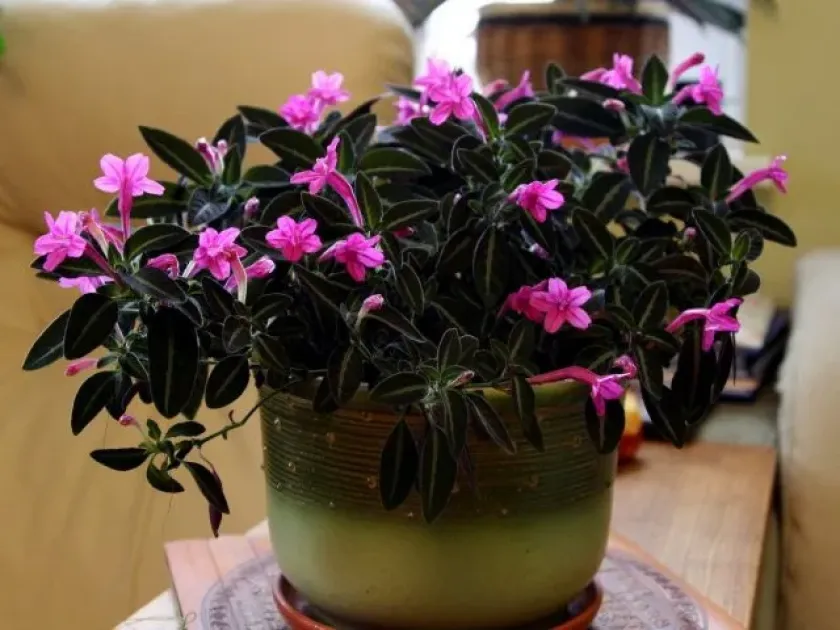
The plant is highly valued for its decorative velvety leaves, which feature a dark green surface with contrasting silvery veins, and its delicate bell-shaped flowers with white or lilac petals. It typically grows into a compact mound, reaching 20–30 cm in height.
To ensure successful growth, Ruellia requires high humidity levels and a stable temperature range between 20–25 °C. The plant is notoriously sensitive to sudden cold drafts and temperature fluctuations, which can trigger leaf drop and stunted development.
The potting medium must be fertile, well-drained, and slightly acidic to neutral. A mixture consisting of leaf mold, peat, and coarse sand with a touch of charcoal is ideal for providing necessary aeration and preventing water stagnation in the root system.
Appropriate light is crucial for this species; it requires bright, indirect light. Direct sunlight, especially during the middle of the day, can scorch the delicate foliage, so placing the plant near east or west-facing windows is highly recommended.
Main diseases and pests
The main pests that affect this crop under poor environmental conditions include spider mites and whiteflies. These pests proliferate rapidly in low-humidity environments, which is why regular misting or using a humidifier is essential for plant health.
Overwatering is the primary cause of root rot and fungal infections, such as powdery mildew. Maintaining a proper watering schedule by allowing the top inch of the soil to dry out between waterings is the most effective way to prevent these physiological and pathological disorders.