
Description
Growing requirements
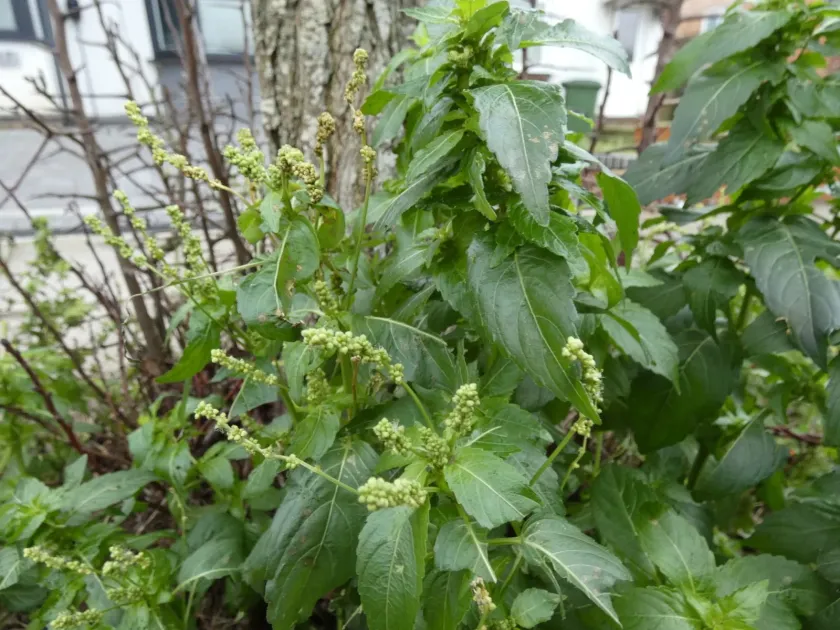
Annual mercury (Mercurialis annua L.) is a herbaceous plant species belonging to the Euphorbiaceae family. It is widely recognized as a common weed in agricultural fields across Europe and other temperate regions.
The plant is typically monoecious or dioecious, with a branched stem and opposite, lanceolate leaves. It thrives in disturbed habitats, including orchards, gardens, and row-crop agricultural settings.
It prefers nitrogen-rich, well-drained, and loose soil conditions. Its ability to colonize areas rapidly makes it a significant competitor for resources in nutrient-rich arable land.
Climate requirements include moderate moisture and mild temperatures. It generally lacks cold tolerance, which is why it typically completes its lifecycle as an annual during the warmer months of the year.
The species is highly prolific in terms of seed production, which ensures its survival and re-emergence in the following season even after successful mechanical removal of adult plants.
Main diseases and pests
The primary agricultural threat posed by Mercurialis annua is its rapid growth, which allows it to outcompete crops for light, nutrients, and moisture during critical development stages.
As a member of the Euphorbiaceae family, it contains compounds that can be toxic to livestock if ingested in large quantities, though it is usually avoided by grazing animals due to its bitter taste.
Regarding plant health, it serves as a vector or host for several fungal pathogens that can negatively impact neighboring cash crops, especially in greenhouse or dense field conditions.
Pest management is challenging because the plant adapts quickly to various environments, necessitating an integrated pest management approach that combines mechanical cultivation and chemical control.
Effective control measures focus on eliminating the plant before the flowering phase to prevent the release of seeds into the soil seed bank, which is essential for long-term field maintenance.
Reference
Connections · Annual mercury
Most often together:
Marketplace


