
Malacothrix coulteri
Malacothrix coulteri
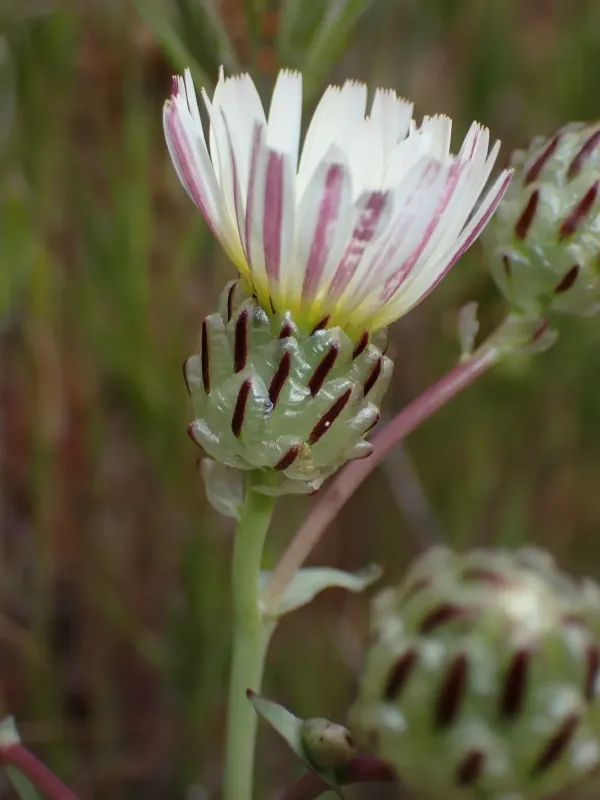
Description
Growing requirements
Malacothrix coulteri, commonly known as snake's head or Coulter's desert dandelion, is an annual herbaceous plant belonging to the Asteraceae family. It is recognized for its unique ability to thrive in harsh desert environments where extreme heat and moisture scarcity are the norm.
The native range of this species covers the arid deserts of California and parts of Mexico. This plant is well-adapted to high-light intensity and sandy or gravelly soil types with low nutrient availability, making it a model for studying drought-tolerant vegetation strategies.
Morphologically, the plant features branched stems and finely divided, feathery leaves. The inflorescence consists of bright yellow flower heads that appear in early spring, which are highly attractive to native pollinators, including bees and butterflies.
The crop requires well-drained, porous soils to perform optimally. It is highly sensitive to waterlogging, as excessive soil moisture promotes root decay, which is lethal to this desert-adapted species. Moderate spring temperatures are crucial for stimulating rapid biomass accumulation.
In terms of agricultural and ecological usage, it is valued for soil stabilization in arid regions. By serving as an early-season floral resource, it contributes to the health of the local ecosystem and provides supplemental forage for livestock in native rangelands.
Main diseases and pests
The primary threats to this species in a cultivated or semi-cultivated environment are fungal pathogens caused by improper drainage. Root rot is the most common condition leading to the sudden collapse of established plants when exposed to prolonged dampness.
Insect pests, primarily aphids, may infest the tender developing inflorescences. However, because Malacothrix coulteri is evolutionarily optimized for desert conditions, it generally maintains high resistance to typical field crop diseases when planted in its natural climate zone.