
Maihuenia patagonica
Maihuenia patagonica
Description
Growing requirements
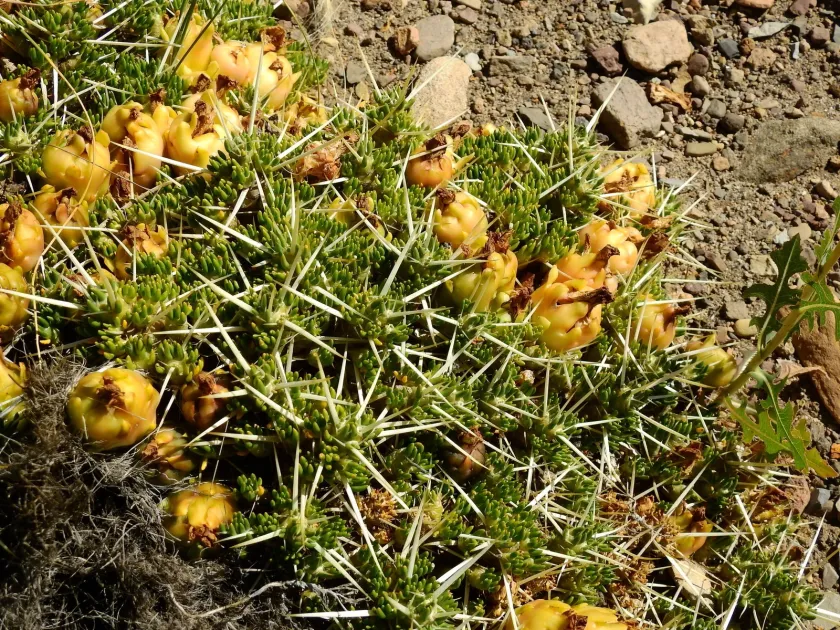
Maihuenia patagonica is a distinctive species belonging to the Cactaceae family, known for its cushion-forming growth habit in high-altitude environments. This perennial plant is highly specialized to survive in the arid and windswept regions of the Patagonian steppe and mountainous areas.
The native distribution of this species spans across Argentina and Chile, where it thrives in extreme climates characterized by intense sunlight, low annual precipitation, and significant diurnal temperature fluctuations. Its botanical structure includes small, succulent leaves and rigid spines that provide protection against grazing animals.
Cultivation requires a substrate that mimics its natural stony, mineral-rich habitat. An ideal soil mix must be extremely well-draining, consisting primarily of coarse sand, crushed rock, and grit, with minimal organic matter to prevent water retention around the root zone.
This species demands full sun exposure to maintain its characteristic compact, mound-like form. Inadequate light levels will lead to etiolation, making the plant weak and susceptible to disease, therefore it is best suited for rock gardens or south-facing greenhouse displays.
The agrotechnical management focuses on extreme drought tolerance during the winter dormancy period. Watering should be restricted to the growing season, ensuring that the substrate dries out completely between intervals to mimic the environmental cycles of its high-altitude origin.
Main diseases and pests
The most significant threat to Maihuenia patagonica is root rot, primarily caused by excessive moisture or poor substrate drainage. Since this cactus is adapted to dry conditions, any accumulation of water in the soil can lead to rapid decay of the vascular system.
Pests such as mealybugs and spider mites are common concerns in greenhouse or indoor environments. Because the plant forms dense cushions, these pests can be difficult to manage, necessitating regular monitoring and specific insecticide treatments when detected.
Fungal pathogens and mold may develop if there is insufficient air circulation around the plants. In stagnant or humid conditions, the crown of the cactus can succumb to fungal infections, causing tissue breakdown and potential plant death.
Physical injuries to the skin of the cactus are dangerous as they serve as points of entry for bacteria and opportunistic fungi. Care should be taken during transplantation or maintenance to avoid creating wounds that could facilitate secondary infections.
Using non-sterilized soil media significantly increases the risk of soil-borne diseases. It is advisable to utilize heat-treated or commercially prepared mineral substrates to ensure a clean starting environment and reduce the overall risk of pathogens.